
 0
0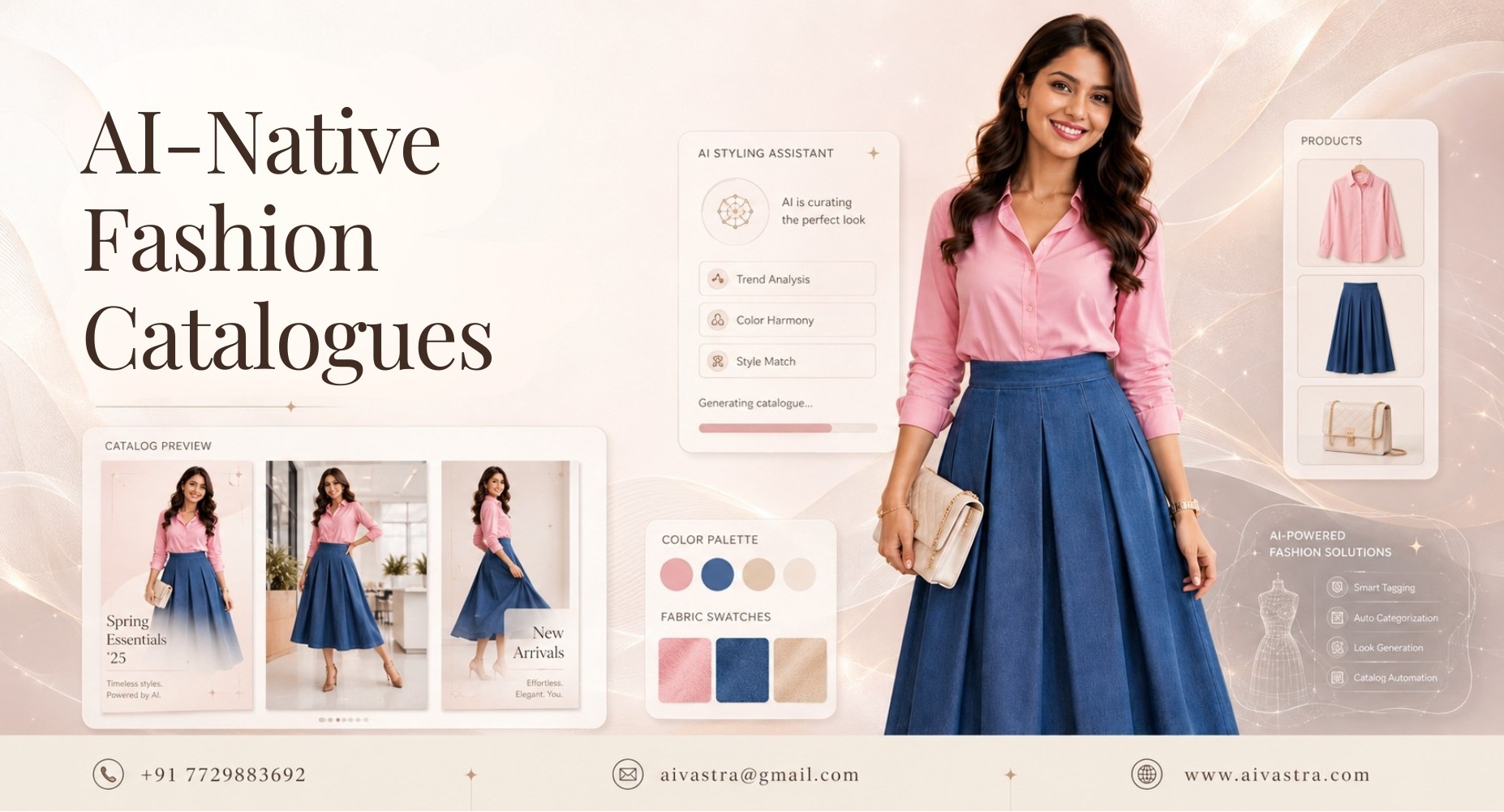
Key Takeaways
- Create virtual samples – Visualize products before physical samples are ready.
- Reduce Production Costs—Minimize repeated photography and sample expenses.
- Faster Product Launches—Prepare catalogue images earlier in the fashion cycle.
- Test Designs Digitally – Explore colors, styles, and collections before production.
- Scale Catalogues Easily – Generate more product visuals without large photoshoots.
Fashion catalogues used to start with a physical sample. Now, many Indian brands are flipping that order—building an AI-native fashion catalogue India pipeline that produces PDP-ready images before a single garment is stitched.
What Is an AI-Native Fashion Catalogue?
An AI-native catalog fashion pipeline replaces the traditional flow of sample → shoot → listing with something faster: design file → AI-generated model image → platform listing. No sample is stitched until there’s proof the design is worth producing.
This isn’t a shortcut. It’s a structural shift in how catalogues get made. Brands already using tools to automate their fashion catalogue production are now extending that same workflow one step earlier—into pre-production.
Why Build a Catalogue Before Samples Exist?
The case for an ai catalogue without physical samples approach comes down to three things:
Speed to market. Brands can list a design, gauge interest, and only produce what sells. This matters most for fast-moving D2C labels working on tight seasonal windows.
Lower sampling cost. Physical sampling is expensive — fabric, labor, shipping, and time. A pre-production catalogue AI approach lets brands test dozens of designs visually before committing production budget to any of them.
Demand validation. Instead of guessing which prints or cuts will sell, brands can put AI-generated visuals in front of real shoppers first. This is a natural extension of the workflows exporters already use—see our post on AI Catalogue for Textile Exporters for how bulk visual production already works at scale.
Who’s Already Doing This in India?
This shift isn’t theoretical. Three groups are already building an AI-native fashion catalogue India brands can point to as proof of concept:
- D2C fashion brands testing new drops before committing to full production runs
- Export houses generating buyer-facing catalogues from tech packs before physical samples ship
- Myntra and other marketplace vendor partners who need to list SKUs fast and can’t wait on studio shoot schedules
For any of this to work at scale, product data has to be clean and consistent—which is why SKU standardization has become a quiet but essential part of the AI-native catalogue pipeline.
What Data Do You Need Without a Physical Sample?
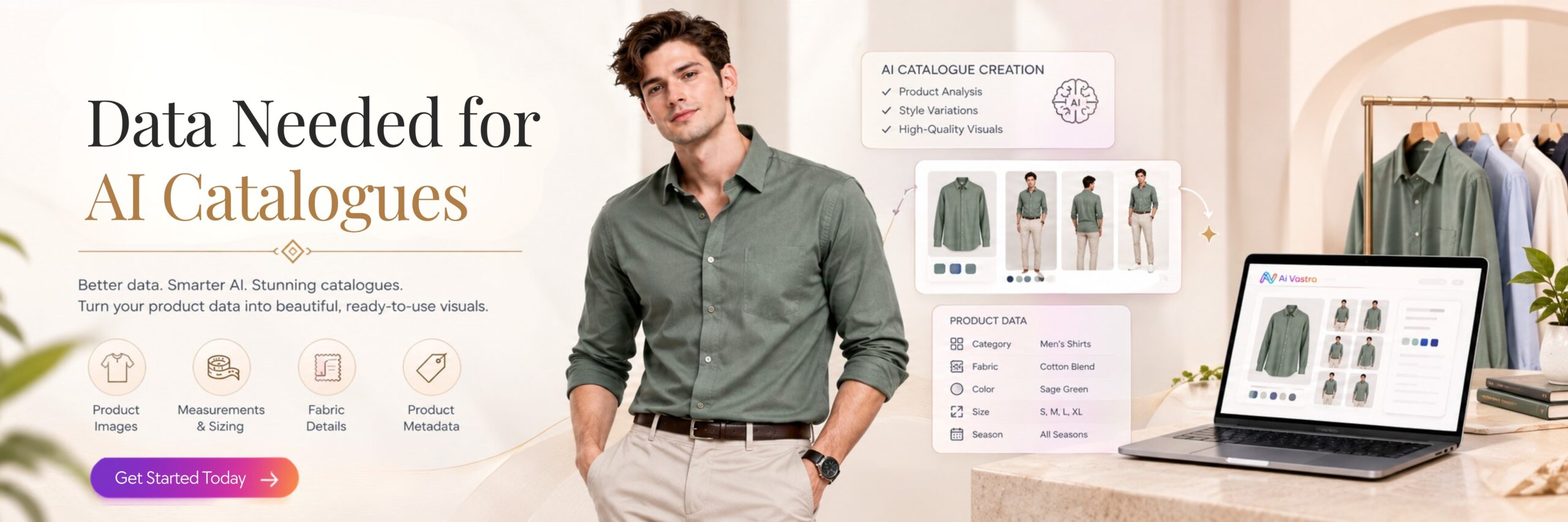
A working fashion catalogue pipeline AI 2026 brands can rely on needs a few key inputs, even without a stitched garment:
- Tech pack — construction details, measurements, and fit specs
- Design file — flat sketch or digital rendering of the garment
- Colour swatch or Pantone reference—so AI output matches true fabric colour
- Fabric texture reference — helps AI render drape and finish accurately
With these four inputs, an AI catalogue pipeline can generate believable, PDP-ready model imagery—no sample required at this stage.
What Still Needs a Physical Garment?
An AI native fashion catalogue India workflow isn’t a full replacement for physical production—it’s a front-loaded step. Certain things still require a real sample:
- Final quality control and stitching accuracy checks
- Fit testing on real bodies
- Fabric hand-feel and comfort validation
- Final color matching under different lighting conditions
The smart approach is using AI-native catalogues to validate demand and design direction first, then producing physical samples only for what’s confirmed to sell. This is where brands exploring bulk catalogue creation are seeing the biggest cost savings—fewer wasted samples and more targeted production.