
 0
0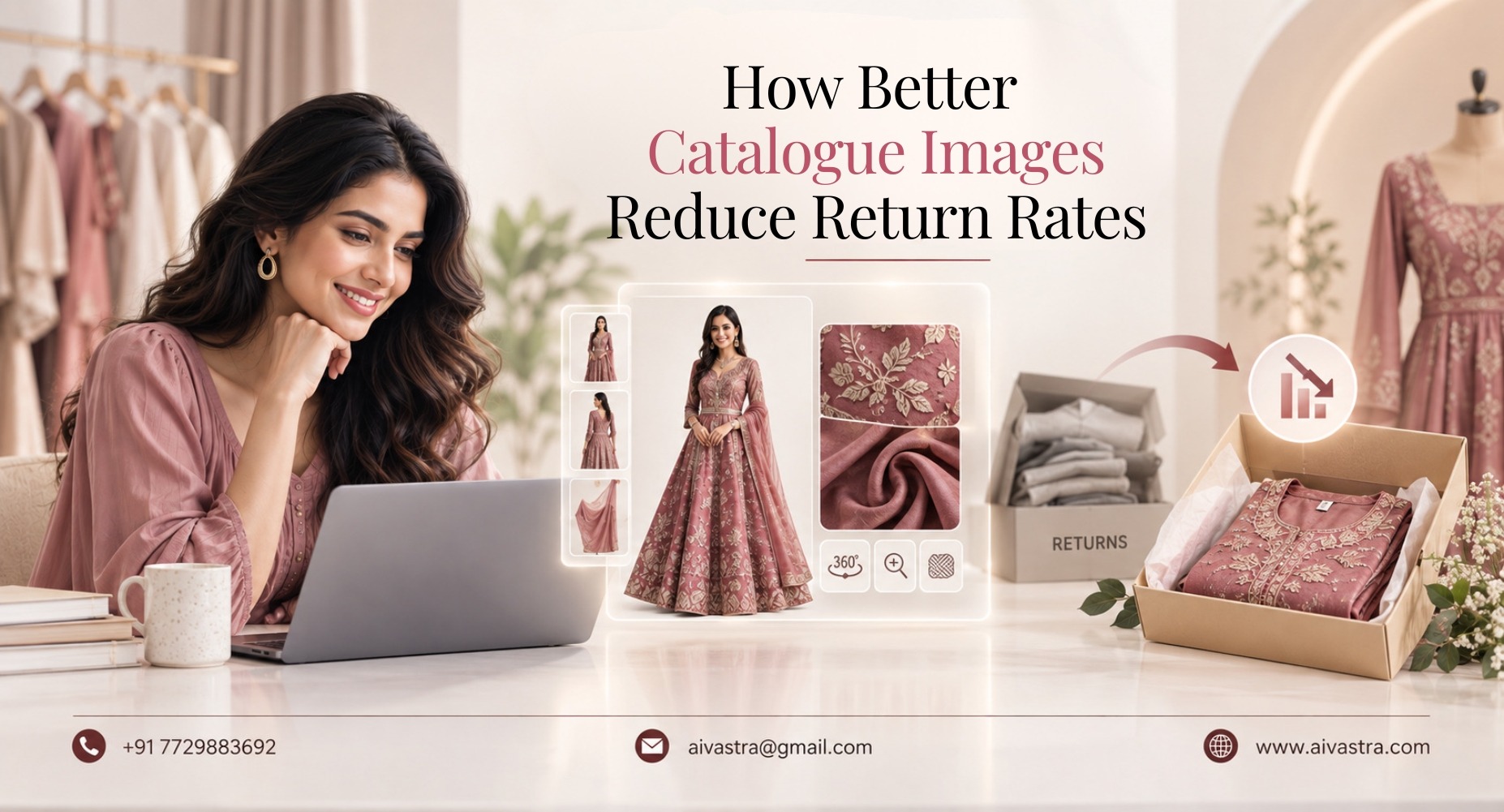
How Better Catalogue Images Cut Your Return Rates
Returns quietly eat into margins more than almost any other cost in Indian fashion e-commerce. Understanding how product images reduce fashion return rates India sellers experience is one of the highest-leverage fixes available — and it doesn’t require a bigger marketing budget.
Key Takeaways
- One such big “hidden cost” in the Indian fashion e-commerce platform is returns, especially for high traffic platforms like Meesho or Flipkart.
- Inaccurate sizing and drape representation in product images is a leading cause of avoidable returns
- A modest reduction in return rate can translate into significant monthly savings, even for mid-sized sellers
The Real Cost of Returns for Fashion Brands
Every return carries multiple layers of cost — reverse shipping, restocking labor, quality re-inspection, and often a garment that can no longer be sold as new. For sellers operating on thin margins, a high return rate can silently erase what looked like a profitable month on paper.
This is especially true for product images reduce fashion return rates India sellers operating on platforms with generous return policies, where customer expectations around easy returns are high, but the operational cost to the seller remains real regardless of how the return happened.
Why Inaccurate Images Cause Returns
A significant share of fashion returns trace back to one root cause: the product didn’t match what the customer expected from the listing image. This isn’t about product quality — it’s about how catalogue images affect return rates by setting (or failing to set) accurate expectations before purchase.
Common image-related return triggers include:
- Garments photographed flat, giving no sense of actual fit or drape
- Color inconsistencies between the listing photo and the actual product
- Model shots using body types that don’t reflect how the garment will look on the average customer
How AI Model Images Reduce Size-Related Returns
AI catalogue images reduce returns most effectively when they address the sizing and fit guesswork that drives so many returns in the first place. AI-generated model imagery can show garments on a range of body types reflecting Indian customers more accurately than a single narrow model type — helping shoppers judge fit against their own body more realistically before buying.
This directly supports the case for better product photography lower returns fashion brands are increasingly making — when a customer can see how a garment fits on a body type similar to their own, the gap between expectation and reality narrows significantly.
How Virtual Try-On Reduces Returns on High-AOV Items
For high-value categories like sarees and lehengas, where average order value is significantly higher, the cost of a single return is proportionally larger too. Virtual try-on technology addresses this directly by letting shoppers preview how a specific garment looks on themselves before purchasing, rather than relying solely on a static model image.
This matters most for exactly the categories where returns are most expensive — heavy, high-AOV ethnic wear where fit and drape uncertainty carries real financial weight. Our AI Virtual Try-On service page covers how this technology works specifically for reducing pre-purchase uncertainty on these higher-value items.

ROI Calculation: 5% Return Rate Reduction on ₹10L Monthly GMV
Here’s a simple way to think about the actual financial impact. Consider a fashion seller doing ₹10 lakh in monthly GMV with a return rate around 25% — a realistic figure for many Indian fashion e-commerce sellers, particularly on platforms like Meesho.
If improved catalogue imagery reduces that return rate by even 5 percentage points — from 25% down to 20% — that translates to roughly ₹50,000 in monthly GMV that stays converted instead of being returned. Factor in the reverse logistics, restocking, and lost resale value avoided on each of those prevented returns, and the actual savings run higher still.
This is why image quality investment consistently shows strong ROI compared to many other e-commerce spend categories — it directly reduces a cost center rather than just driving more top-of-funnel traffic. Our AI Catalogue Photoshoot service page and our Why AI Models Don’t Convert post both cover how to get this image quality right, since poorly executed AI imagery can undermine these same gains.
Applying This Across Marketplaces
Return rate dynamics vary by platform — Meesho, Flipkart, and Amazon each have different customer expectations and return policies. Our Marketplace pages break down platform-specific considerations sellers should factor into their image strategy.