 0
0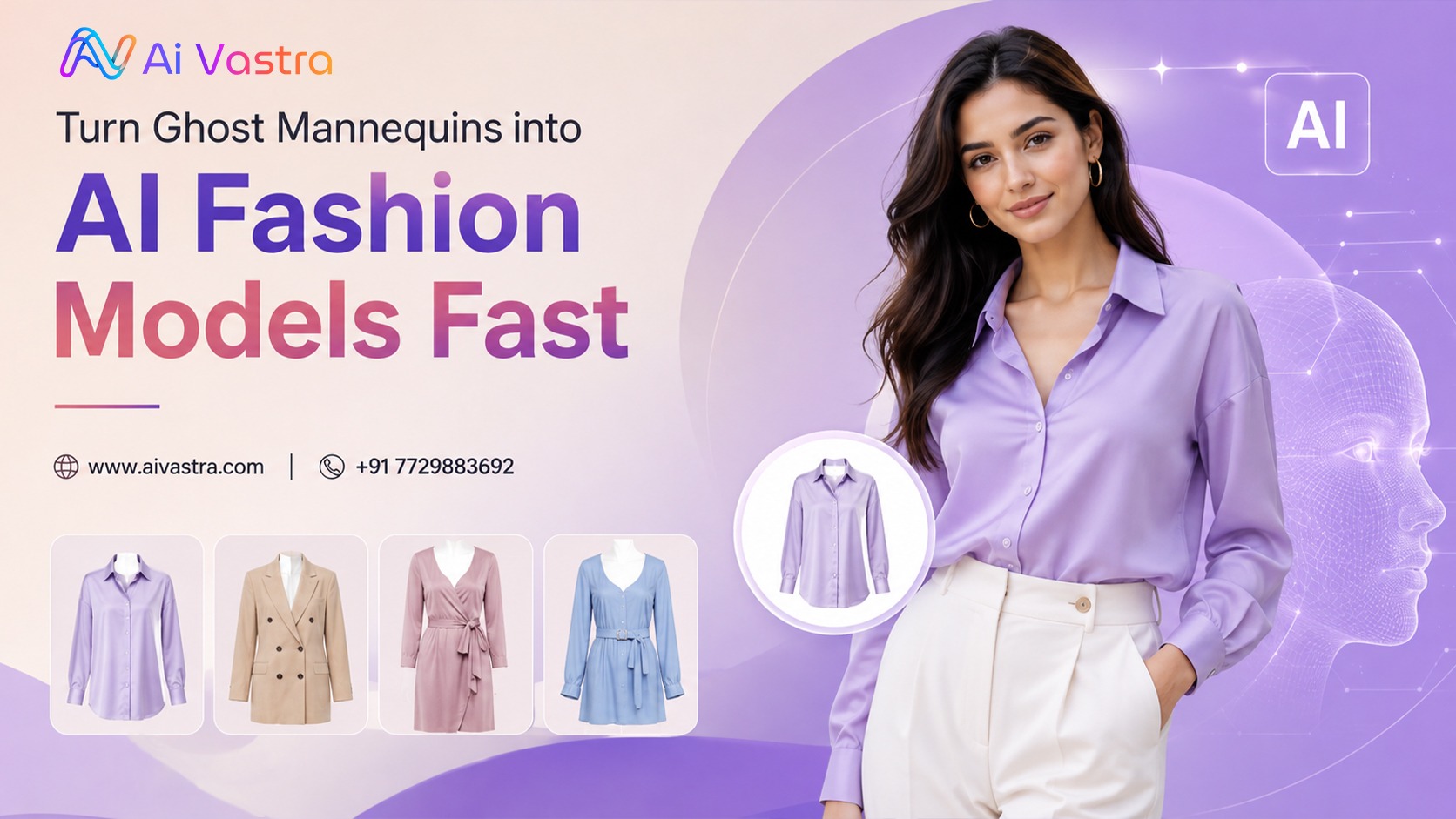
Key Takeaways
- Ghost mannequin to AI model image conversion upgrades your existing catalogue without a single additional photoshoot
- Ghost mannequin photography underperforms on-model images in click-through rates, buyer aspiration, and marketplace conversion
- AI Vastra extracts garment detail from mannequin source photos and renders them on realistic AI models with preserved structure, colour, and texture
- Structured garments — formal shirts, knitwear, tailored jackets, kids’ wear, bras — convert with the strongest results
- Techniques to enhance mannequin images for fashion catalogs through AI conversion are most effective when source image quality is highBatch processing allows complete existing catalogue upgrades in 24–48 hours.
You already have the mannequin photos. You don’t need to reshoot — you need to upgrade
Thousands of Indian fashion brands have built their entire product catalogue using ghost mannequin photography. It was practical, affordable, and consistent. But in 2026, it’s showing its limitations — lower click-through rates on marketplaces, reduced buyer aspiration, and a visual standard that’s falling behind brands using on-model imagery.
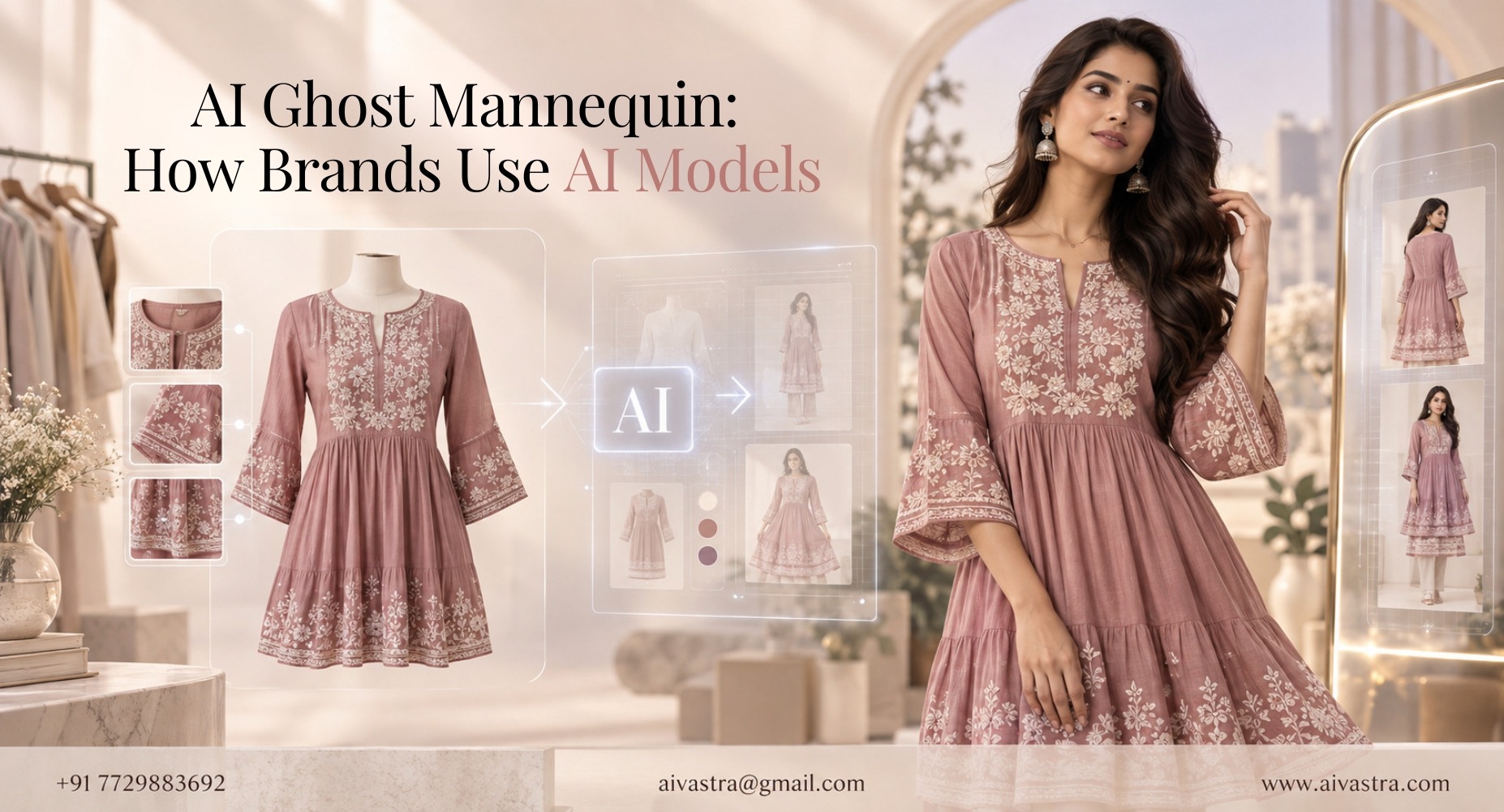
The good news: you don’t need to book a model and reshoot everything. Ghost mannequin to AI model images conversion lets you take your existing mannequin photos and transform them into professional on-model catalogue images — using AI, without a single additional photoshoot.
TL;DR: AI Vastra can turn outdated “ghost man” or “flat lay” photos into lifelike images of the people they’re set against, transforming your entire catalogue without requiring a reshoot, model booking or marrying up the price of your photos.
What is a purpose of ghost mannequin photography is to tell the viewer the story of the product?
The main idea behind ghost mannequin photography is that it creates the tale of the given product.
In ghost mannequin photography, clothes are placed in front of a mastoform (or no mannequin), and images are taken of the garment without the body, resulting in the image of a garment floating in space and with a space where the body used to be — most often applied for knitwear, formal shirts, kids wear, and innerwear.
The technique became popular because it solves a real problem: showing garment structure and shape without the cost of model photography. A formal shirt collar sits correctly. A knitwear neckline holds its shape. An innerwear bra cup maintains its structure. Ghost mannequin gives the garment dimension without requiring a human body inside it.
For categories where garment construction matters more than drape — structured shirts, tailored jackets, kids clothing, lingerie — ghost mannequin catalogue photography has been the practical middle ground between flat-lay and full model shoots.
But it has real limitations that are becoming more visible as marketplace competition increases.
Why Are Ghost Mannequin Images Losing Ground to On-Model Catalogue Photos?
Ghost mannequin images consistently underperform on-model images in click-through rates and conversion metrics — because they remove the human element that helps buyers visualise wearing the product.
The core problem with ghost mannequin photography is the same problem it was always designed to work around: there’s no person inside the clothes. And buyers — especially younger online shoppers — want to see how a garment looks on a real body, not how it looks on an invisible form.
Specific limitations that brands using ghost mannequin photography report:
- Lower click-through rates on Flipkart and Amazon — on-model images consistently attract more clicks in A/B tests across fashion categories
- Reduced aspiration — a formal shirt worn by an AI model with the right styling reads as a desirable product; the same shirt floating on a mannequin reads as a product specification
- Limited fit communication — ghost mannequin shows garment structure but can’t communicate how fabric drapes, moves, or fits across different body types
- Reduced social media performance — mannequin images perform poorly on Instagram and Pinterest where lifestyle context drives engagement
The solution for most brands isn’t to abandon their existing ghost mannequin library — it’s to improve mannequin catalogue photos by converting them into on-model images using AI.
How Does AI Vastra Convert Ghost Mannequin Photos to AI Model Images?
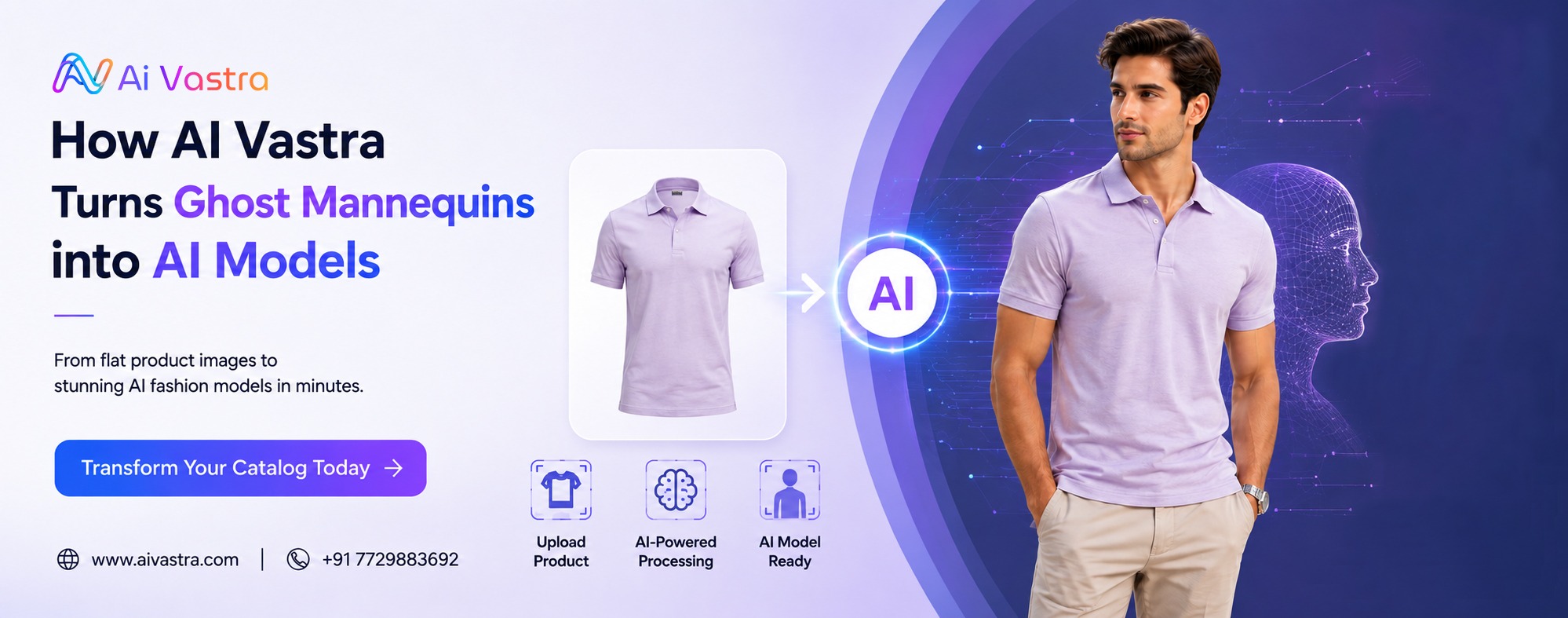 AI Vastra converts ghost mannequin to AI model images by using your existing mannequin photograph as the garment source — extracting the garment shape,
structure, and surface detail — and rendering it accurately on a realistic AI model.
This is the workflow that makes mannequin images to model images AI conversion practically useful for brands with existing catalogues:
Step 1 — Upload Your Mannequin Image Upload your existing ghost mannequin photo — standard resolution, standard format. The AI extracts the garment from the mannequin background automatically.
Step 2 — Select Your AI Model Choose the body type, skin tone, height, and pose that best suits your garment category and target customer. For formal shirts, a standing professional pose. For knitwear, a relaxed lifestyle pose. For kids wear, an appropriately sized AI model.
Step 3 — AI Renders the Garment on the Model The garment is placed on the selected AI model with accurate structure preservation — collar shape maintained, sleeve length correct, fabric drape adjusted for body presence rather than mannequin fill.
Step 4 — Review and Download Review the generated image. For garments where mannequin structure provided good shape information (formal shirts, structured jackets, bras), results are typically very strong. Download and replace your existing mannequin catalogue image.
For brands also creating new garment images from scratch alongside converting existing ones, our guide on How to Create Clothing Catalogue Images Without Models covers the complete new-image workflow.
Which Garment Types Work Best When Converting Ghost Mannequin to AI Model Images?
Ghost mannequin to AI model images conversion works best for structured garments where the mannequin provided good shape data — formal shirts, knitwear, tailored jackets, bras, and kids clothing all convert with strong results.
Formal Shirts and Dress Shirts Ghost mannequin is extremely common for formal shirts because collar structure matters. AI conversion preserves collar shape, button placket alignment, and sleeve length — while adding the body presence and styling context that makes a shirt look wearable rather than clinical.
Knitwear Sweaters, cardigans, and knit tops photographed on ghost mannequins often look shapeless without a body inside them. AI model conversion restores the body silhouette that shows how knitwear actually drapes on a person — significantly improving the aspiration factor.
Kids Wear Children’s clothing photographed on ghost mannequins can look oddly adult or dimensionless. AI model conversion using appropriately sized AI models for different age groups gives kids wear the liveliness that helps parents visualise their child in the outfit.
Innerwear and Lingerie Bras and structured innerwear hold their shape well on mannequins, providing good source material for AI conversion. On-model renders show fit and comfort context that pure mannequin images can’t communicate.
Tailored Jackets and Blazers Structure garments that hold their shape on mannequins convert cleanly — with AI adding the shoulder posture, lapel fall, and body context that makes tailoring look intentional rather than manufactured.
Techniques to enhance mannequin images for fashion catalogs through AI conversion work least effectively for heavily draped, unstructured garments like chiffon sarees or flowing maxi dresses, where the mannequin provides minimal useful shape information. For these categories, uploading a new flat-lay or fabric photograph directly produces better results.
What Quality Should Brands Expect From Ghost Mannequin to AI Model Conversion?
Brands converting Ghost mannequin to AI model images should expect results equivalent to a professional on-model catalogue shoot for structured garments — with the garment’s original detail, colour, and construction preserved accurately on a realistic AI model.
Realistic quality expectations:
- Garment colour is preserved exactly as photographed
- Structural details (collars, cuffs, buttons, seams) render accurately from the mannequin source
- Fabric texture visible in the original mannequin image is preserved on the AI model
- Body posture and model styling are appropriate for the garment category
- Background can be set to white (marketplace standard) or lifestyle as required
The main variable is source image quality. A clean, well-lit ghost mannequin photograph produces significantly better AI conversion results than a poorly lit, wrinkled, or blurry source image. Brands with high-quality existing mannequin libraries get near-studio-quality results from conversion. Brands with lower-quality source images will see proportionally lower output quality.
Your existing mannequin catalogue is one AI conversion away from professional model images
AI Vastra helps fashion brands convert ghost mannequin to AI model images — transforming existing catalogue libraries into on-model professional photography without reshooting, rebooking, or rebuilding your photography budget.
👉 Start your free demo today and convert your first mannequin images to on-model catalogue photos within hours.