
 0
0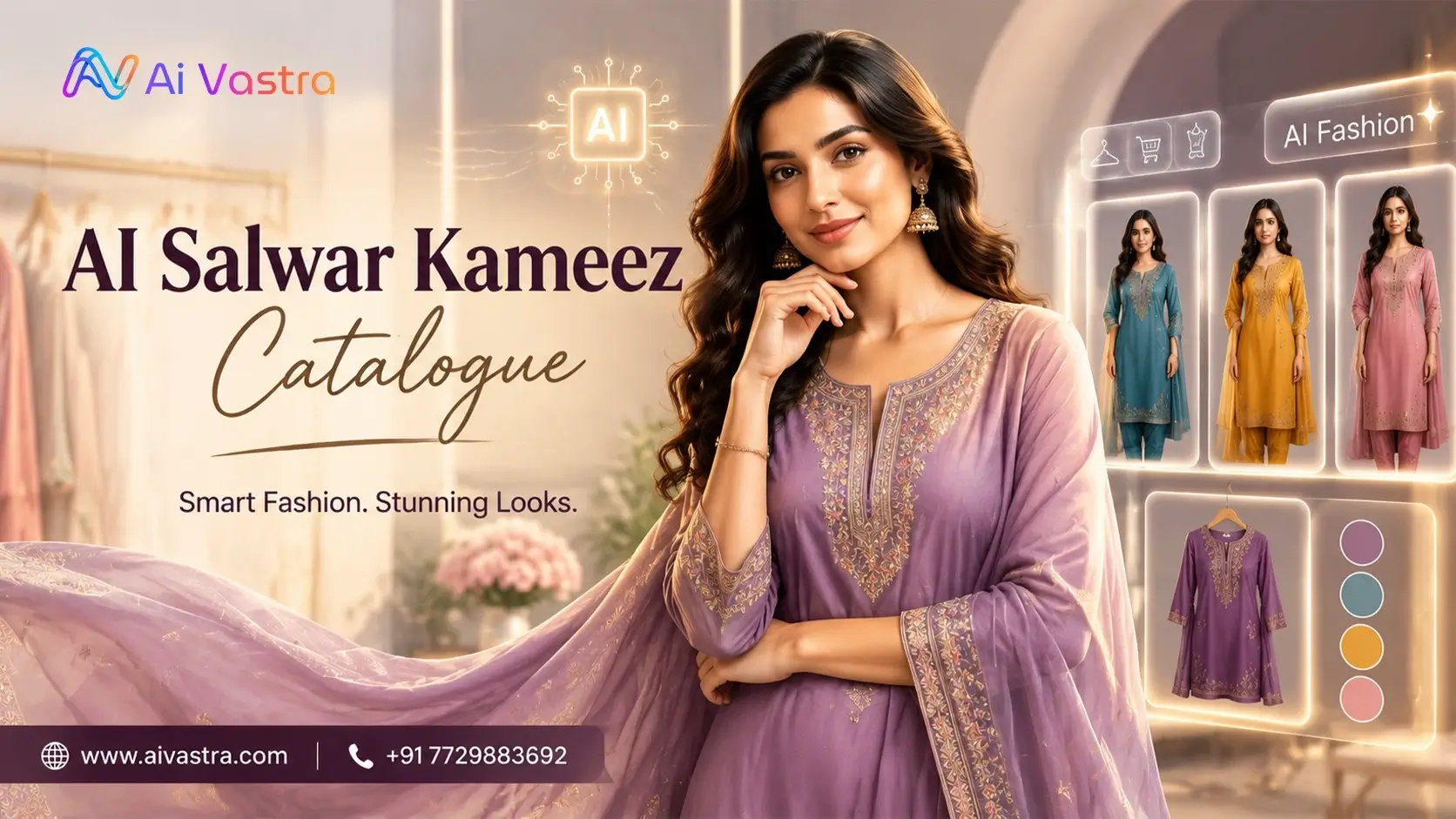
Some of the most challenging suits to shoot are Salwarkameez and suits. The sheer variety of ways to drape the dupatta, from langdaan to the heavy embroidery, from numerous bottom-wear outfits to nothing, is quite hard to capture, covering a single productive portion of the outfit. AI catalogue creation Indian suits salwar kameez brands rely on solving these exact challenges – here’s how it works.
Why Indian Suits Are Uniquely Hard to Catalogue
A suit set doesn’t consist of just a t-shirt and a kurta, it is a combination of suit parts that function in synergy.
- Dupatta placement — draped, pleated, or pinned differently across regional styles
- Embroidery and threadwork detail — needs to be visible without overexposing the fabric
- Bottom-wear variation — churidar, palazzo, and straight pants change the entire silhouette
- Multi-piece coordination — top, bottom, and dupatta need to look cohesive in one image
This is exactly why AI catalogue creation Indian suits salwar kameez brands use needs to go beyond generic model generation — it has to handle these details specifically.
Style differences and their significance to the regions
There are not only a lot of different types of suits, but there are a lot of different looks that these suits can take:
- Punjabi suits – usually strong colors, straight-cut kameez with phulkari or heavy embroidery.
- Lucknowi suits – light chikankari, muted fabric combinations, laid-back shapes
- In the south of India, fell dressing and South Indian fabrics were used in salvars. There are different styles of flattering and fabrics in which the south indian salvars were used.
A generic model preset that ignores these regional differences produces catalogue images that feel off to the target buyer. Brands selling across regions need presets flexible enough to reflect these distinctions accurately.
How AI Vastra Handles Embroidery and Threadwork
Heavy embroidery is one of the biggest risks in AI-generated catalogue images — poor rendering can blur or flatten detailed threadwork. AI Vastra addresses this by:
- Preserving fine embroidery detail from the original fabric or garment photo
- Rendering fabric texture and sheen accurately under different lighting presets
- Avoiding distortion around heavily embellished areas like necklines and borders
This level of detail preservation is what separates a usable salwar kameez product photography ai tool from one that just wraps fabric onto a generic body shape.
Creating Multi-Piece Set Catalogue Images
For a true suit set, the catalogue image needs to show top, bottom, and dupatta working together. The process typically involves:
- Upload individual piece photos (kameez, bottom, dupatta) or a full flat-lay of the set
- Select a model preset and specify bottom-wear style (churidar, palazzo, straight)
- Choose dupatta styling — draped over shoulder, pleated, or front-pinned
- Generate the complete coordinated look as one catalogue-ready image
This workflow mirrors the approach used for other ethnic categories, covered in our AI Catalogue Photography for Kurtis Sarees Lehengas post, adapted here for the specific challenges suits present.
Best Try-On AI for Indian Suits and Sarees with Your Own Background
Many sellers specifically want control over the background their products appear against, matching their existing store aesthetic. The best try-on AI for indian suits and sarees with your own bg options let sellers:
- Upload a custom background image
- Keep branding consistent across a full catalogue
- You can either match the packaging colors to the storefront graphics, or use changing colors or graphics in the packaging that tie into the storefront colors.
This adaptability becomes important for D2C sellers that already have a defined visual style, and do not want AI-generated images to blow it out of the water.
Indian Suits Catalogue Without a Photoshoot: The Meesho/Flipkart Workflow
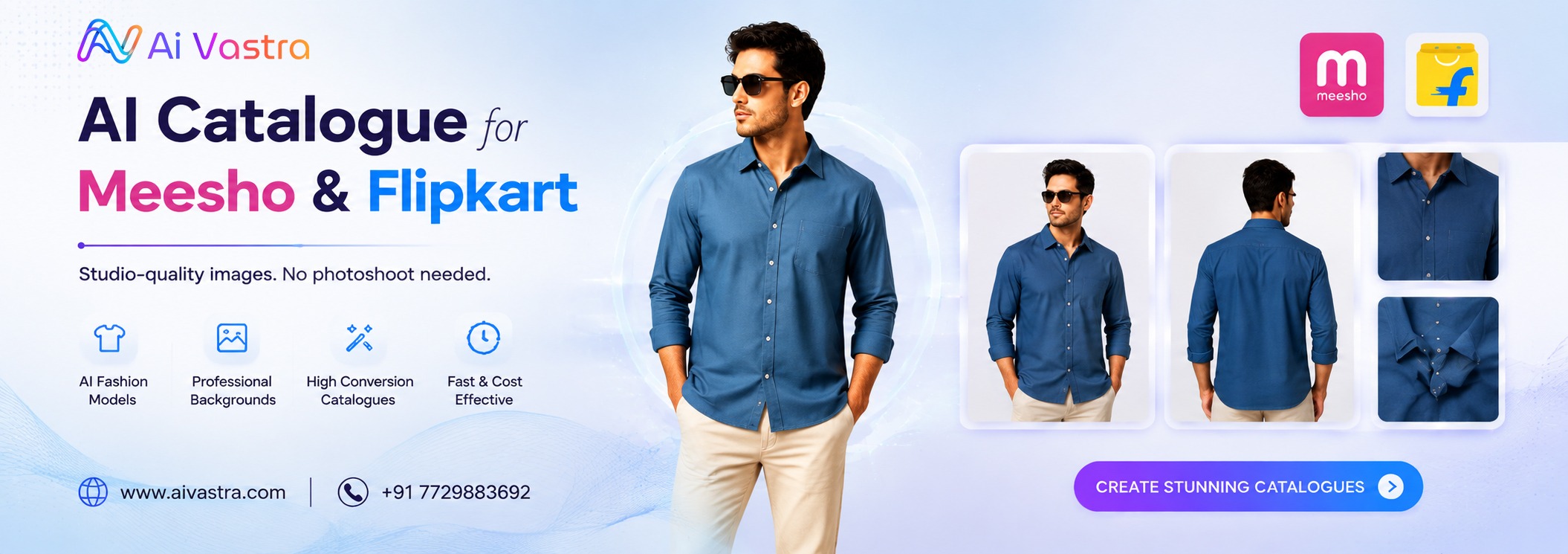
With both Meesho & Flipkart, speed is as important as quality for the seller. A typical indian suits catalogue without photoshoot workflow looks like:
- Photograph the flat suit set or fabric swatch
- Upload to AI Vastra with SKU details
- Generate model images in the required marketplace format
- Export directly formatted for Meesho or Flipkart listing requirements
This removes the studio dependency entirely, letting sellers list new suit designs the same day fabric arrives — no waiting for sample stitching or shoot scheduling.
Why This Matters for Ethnic Wear Brands
Suits and salwar kameez remain one of the highest-volume categories in Indian ethnic wear, and catalogue quality directly affects conversion. For a broader look at how AI fits across ethnic wear categories, see our AI Photoshoots for Ethnic Wear pillar.
Final Thoughts
AI catalogue creation Indian suits salwar kameez brands needs to handle dupatta styling, embroidery detail, and regional variation — not just generic model wrapping. With the right tool, sellers can go from fabric to finished catalogue the same day, without ever booking a studio.