
 0
Dupatta AI Draping: How to Show Complete Ethnic Look Catalogues Without a Studio
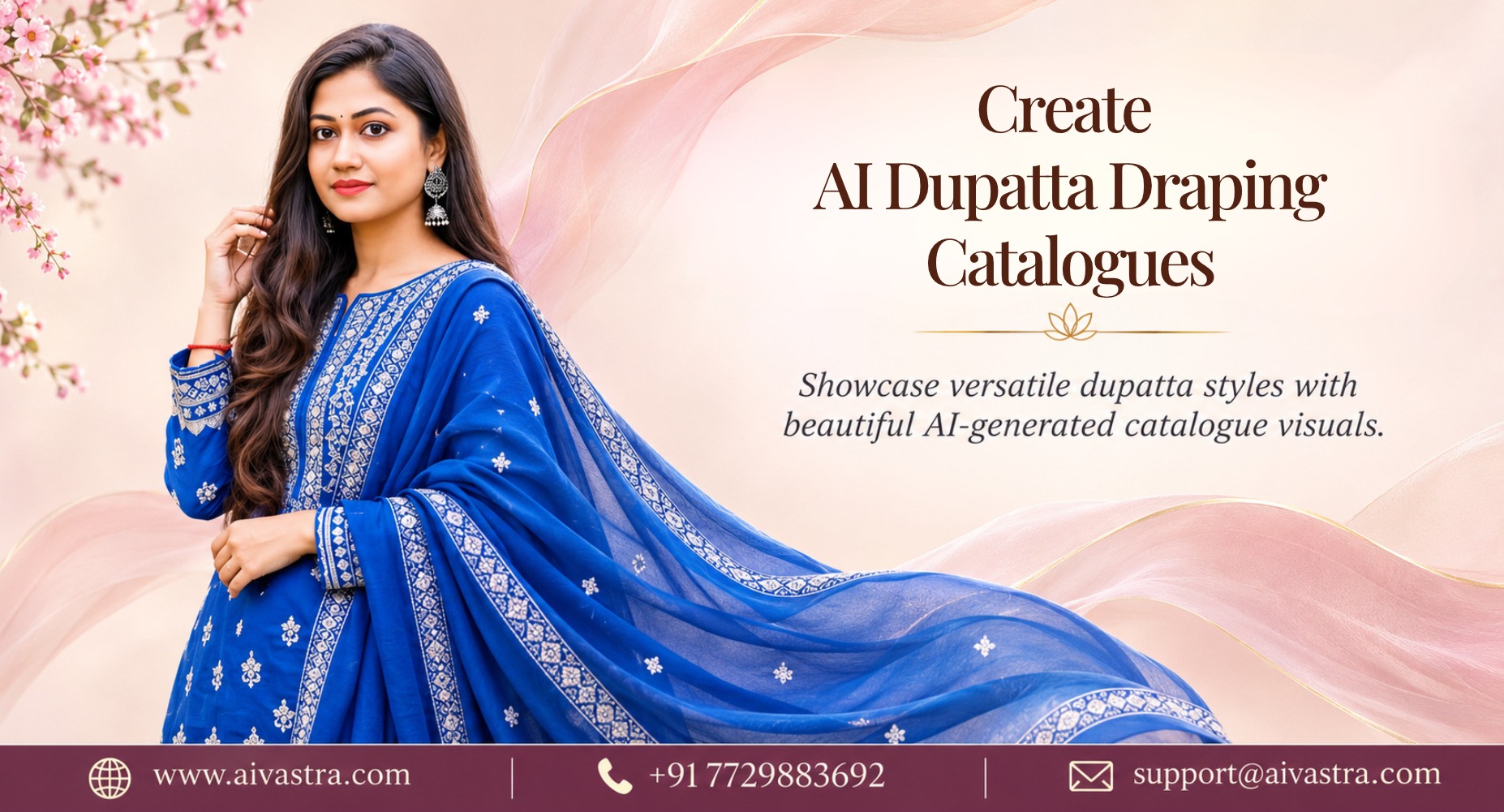
AI Dupatta Draping An ethnic outfit is complete only when adorned with a dupatta, and capturing it is perhaps the most difficult part, twice over. The thing with brands, whether in India or South Asian labels sold in the UK, US and Canada is the cloth drops differently on every single time. By using Dupatta AI draping, you can effortlessly drape full sets from Product photos without having to make additional shoots.
Key Takeaways
- Getting those dupattas to look picturesque consistently can be difficult since the drape changes every time you make a change!
- The AI can model a dupatta in the desired style and send the top, bottom and dupatta all together in one image.
- A saved template helps keep styling consistent across a large catalogue
Why the Dupatta Is Difficult to Photograph
A stylist can fit the dupatta on a model flawlessly one way then drag the model around and the cloth style changes. Common problems include:
- Uneven fall. Left and right sides hang differently from shot to shot.
- Smooth knits, tarts, and slips. Chiffon, net, and georgette are always in motion.
- Heavy borders. Embroidered edges pull the fabric and need care.
- Set coordination. The dupatta must match the top and bottom in colour and print.
- Volume of work. If the catalogue contains 100 sets of drapes, then 100 sets will be repeated.
Many brands end up shooting the top, bottom, and dupatta separately or paying for long styling sessions. That’s slow and costly.
How Dupatta AI Draping Works
The basic flow is as follows:
- If showing a set, include photos of the top and bottom.
- The AI reads color, fabric look, border, and print.
- You choose a model and a drape style.
- AI places the dupatta on the model, following the body/bodily pose.
- To download the photo in the desired dimensions, you have to examine the image and then download it.
Team: Confirm exactly how AI Vastra handles dupatta placement and drape control before publishing.
Our AI Saree Draping post explains related ideas for six-yard fabrics, since both rely on believable fabric fall.
Dupatta Draping Online: Front, Shoulder and Back Styles
A buyer wants to know the various ways in which a Dupatta can be worn. Displaying multiple styles will assist them to see what the look will look like. Common styles include:
- Front drape: the dupatta rests across the front with both ends hanging
- One-shoulder drape: one end over a shoulder, the other falling in front or back
- Both shoulders: worn like a shawl across the back
- Back drape: draped behind, with the ends falling forward
- Scarf style: looped around the neck for a modern look
- Head cover: often used for bridal looks
Team: Confirm which styles AI Vastra currently supports.
Generally speaking, 2-3 drapes of the Dupatta are enough for the online listings. If you have to list all choices, then the page will be cluttered.
Create a full Ethnic Outfit Catalogue AI: Top, Bottom, and Dupatta images.
AI-powered ethnic outfit Cataloguing provides a 360-degree view of a complete ethnic outfit, allowing users to visualize how the elements combine. That’s useful for:
- Salwar kameez : sets with matching dupattas
- Kurtis: paired with a palazzo and dupatta
- Lehengas: with choli, skirt, and dupatta
- Bridal wear: where the dupatta is a focus piece
The Salwar Kameez , Kurtas and Lehangas and Virtual Try-On posts provide details on each of these categories. When using AI to generate ethnic set images, be sure to verify the color and print compatibility with the actual images.can create; always check that colors and prints match the real pieces.
Keeping Dupatta Drape Consistent Across 100 SKUs
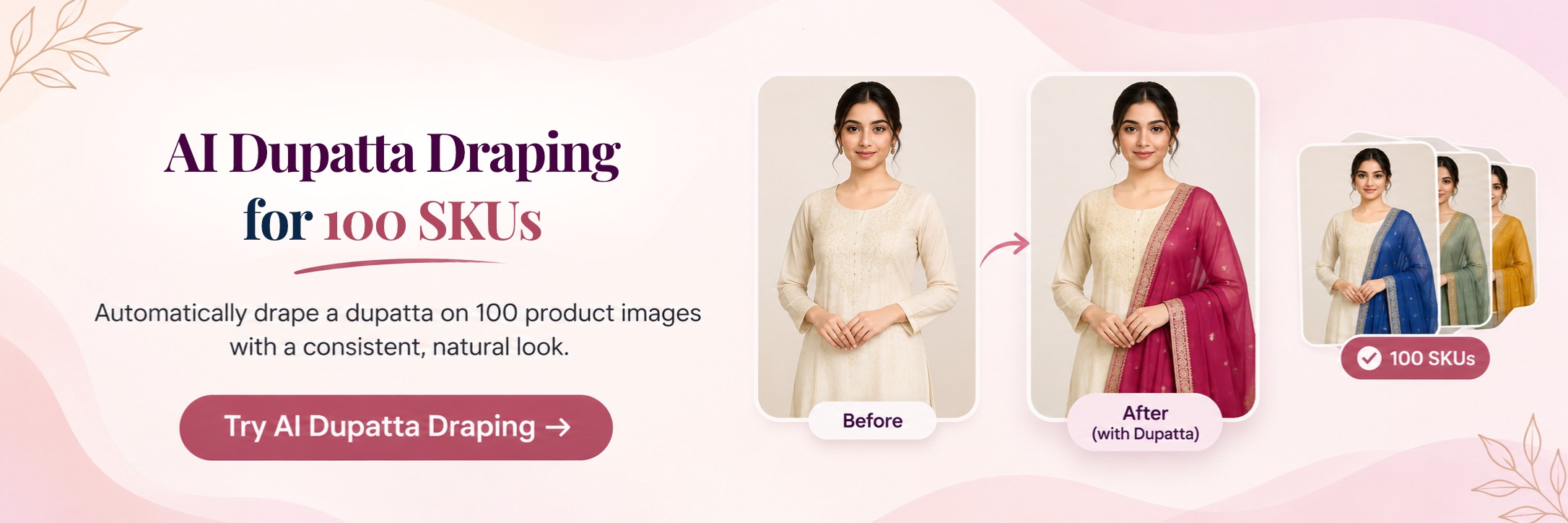
That is where AI comes in handy: consistency. Pick some look once and use it in a batch:
- Pick a template. Select the model, pose, background, and drape.
- Organize files. Name each photo by SKU so the batch matches.
- Process in batches. Upload multiple files at the same time, rather than one file at a time.
- Review a sample. Open and review (approx 20 images) before approving the remainder.
- Fix outliers. Regenerate any image with an odd fold or wrong colour.
Team: Confirm how AI Vastra’s batch settings keep the drape style consistent.
Our Standardize 500 SKUs post covers this batch method for large catalogues.
Who Benefits From an AI Ethnic Look Catalogue
An AI ethnic look catalogue suits:
- Ethnic wear brands that sell complete sets
- Bridal accessory brands selling dupattas, stoles and chunnis
- Meesho and Amazon sellers listing many designs
- D2C brands looking for a consistent appearance across site and marketplaces.
- These are South Asian etsies that sell across Etsy, Amazon. com and their international stores.
India Focus: Sets on Meesho, Amazon. in and D2C Sites
In India, numerous ethnic-looking garments are sold in pairs and wedding and festive seasons witness sharp surges in sales.Shooting each set in a studio, with styling for every dupatta, is hard to afford at scale, especially for sellers outside metro cities. Photographing the pieces flat and AI Fashion Model Images can cut that work. Before uploading, check each marketplace’s current image rules, since they change.
Check Before You Publish
Dupatta colour matches the real fabric
Border and embroidery look right.
Drape looks natural, with no strange folds.
Top, bottom and dupatta match as a set
The model’s pose shows the dupatta clearly
Try It on Your Hardest Dupatta
Test dupatta AI draping with your piece, such as a sheer fabric or a heavy border, and compare it with your last shoot. See finished examples on the Catalogue Showcase page or check the Pricing page to start.