
 0
0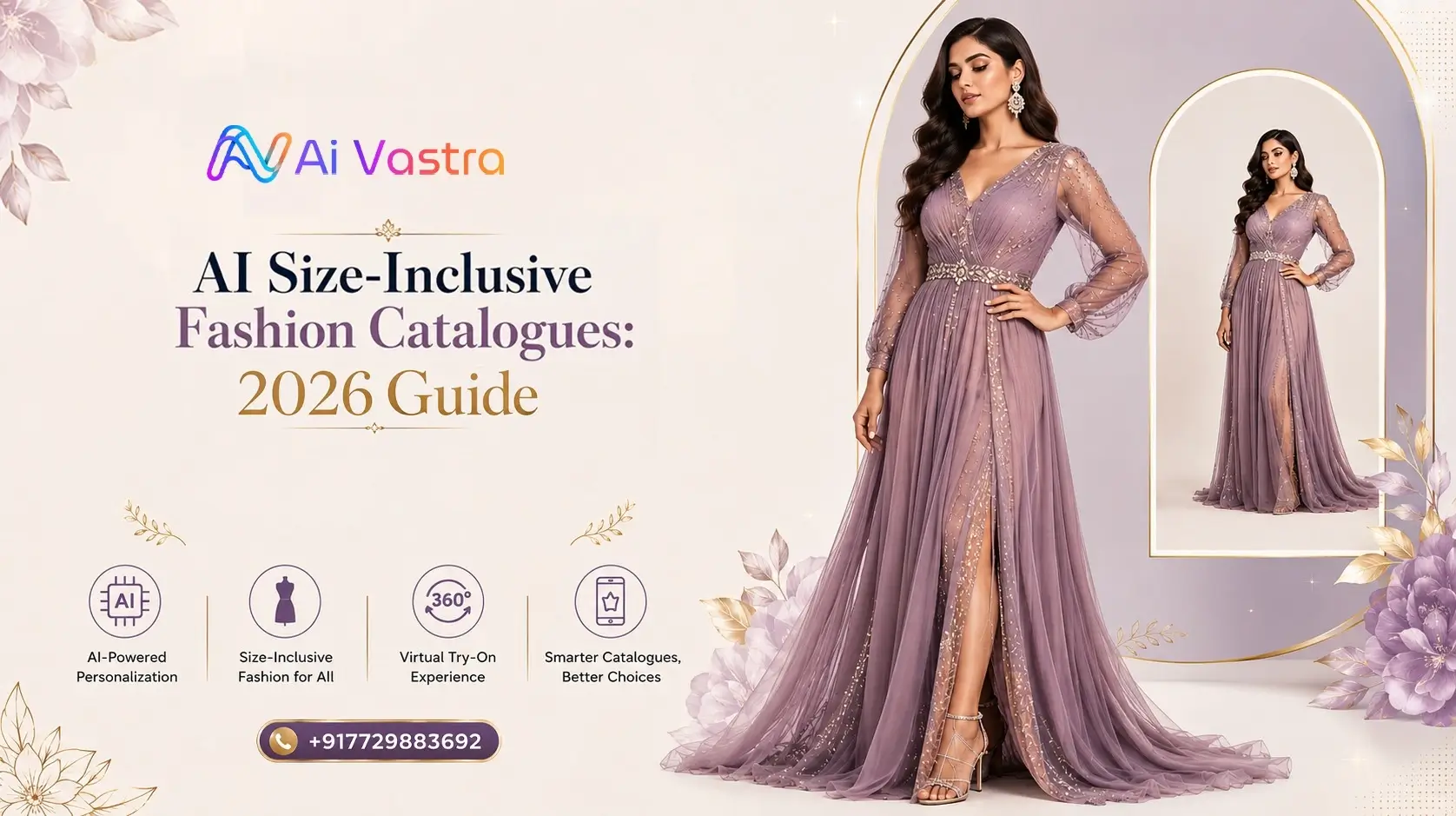
Key Takeaways
- For Indian fashion brands, the advantage of having size-inclusive AI model images lies in higher conversion rates, lower returns and enhanced customer relationships.
- Traditional size-inclusive photography costs 3–5x the standard photography budget — making AI the only practically scalable solution
- AI Vastra’s model library includes standard, plus-size, and petite AI models with Indian body proportions and diverse skin tones
- Batch processing generates the same garment across multiple body types simultaneously — 40 garments on two body types produce 80 images in one 24–48-hour session
- Inclusive catalogue photography India brands need is now achievable without multi-model shoots or inflated photography budgets
- Fit-related return rates reduce when buyers see garments on body types that match their own — the expectation gap narrows with accurate size representation
Most fashion catalogues show one body type. Most fashion customers don’t have that body type. That gap is costing brands sales, returns, and customer trust.
Size inclusivity in fashion catalogue photography isn’t just a values conversation anymore — it’s a conversion conversation. When a customer observes a garment on a person in a similar body shape to their own, they are more likely to willingly return it, hold their garments, and be loyal to the brand compared to those customers who have to imagine how a garment would look on them.
Platform requirements add to the business case of Indian fashion brands. Myntra now encourages plus-size model representation for certain categories. D2C brands targeting wider demographics are being pushed by customers to show realistic fit across size ranges.
The traditional solution — hiring multiple models in different sizes — is expensive enough to price most brands out of the option entirely.
Size-inclusive AI model images in a fashion catalogue make this practical at scale.
TL;DR: size-inclusive AI model images in a fashion catalogue allow brands to show the same garment on multiple body types — different sizes, heights, and proportions — using AI models, without booking multiple models or running separate photoshoot sessions.
Why Do Size-Inclusive Catalogue Images Matter for Fashion Brand Conversion?
Size-inclusive AI model images in fashion catalogues improve conversion rates, reduce returns, and build stronger customer relationships — because buyers make more confident purchase decisions when they can see how a garment fits a body similar to their own.
The data behind this is consistent:
- Fashion brands that show garments on multiple body types see measurable reductions in return rates — buyers’ expectations are better calibrated to the actual product
- On-model images on body types that reflect the actual customer demographic convert better than images on sample-size models for plus-size and mid-size product categories
- Myntra’s seller data indicates that listings with diverse model representation see higher engagement metrics than equivalent listings with single-model presentation
For Indian fashion brands specifically, the opportunity is significant. The average Indian woman’s body proportions differ considerably from the sample-size model standard inherited from western fashion photography. Brands showing garments on AI models with Indian body proportions and realistic size representation are showing something most of their competitors aren’t.
As we covered in our guide on AI Fashion Models for Clothing Catalogues, the move to AI model photography opens possibilities that traditional shoots never could — and size diversity is the most commercially valuable of those possibilities.
What Does Traditional Size-Inclusive Model Photography Actually Cost?
Hiring multiple models across different size ranges for size-inclusive catalogue photography typically costs 3–5x the per-product photography budget — making it financially inaccessible for most growing fashion brands.
Here’s what inclusive catalogue photography India brands face with traditional approaches:
- A size-inclusive photoshoot for one garment across three body types (standard, plus, and petite) requires three separate model bookings
- Each model booking: ₹5,000–₹25,000 per day
- Studio time extends proportionally — three models means three times the setup and shoot time
- Editing requirements multiply with each model variation
For a brand with 50 products wanting to show each garment on two body types, that’s 100 individual model sessions — a photography budget that most D2C brands simply don’t have.
This is why Plus-size AI model catalogue production through AI is the only practically scalable solution for size representation in fashion catalogues. The marginal cost of adding a second or third body type variation through AI is negligible compared to booking an additional model.
How Does AI Vastra Enable Size-Inclusive Catalogue Photography at Scale?
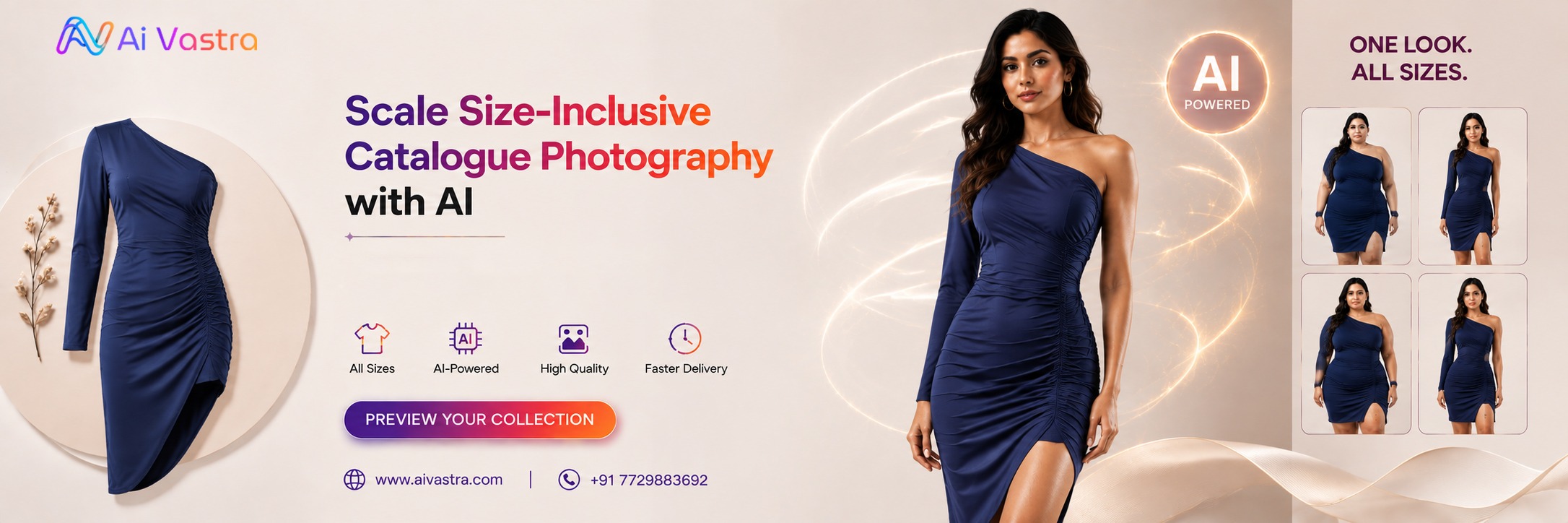
AI Vastra’s diverse AI model library enables a size-inclusive AI model image fashion catalogue by providing realistic AI models across a range of body types, sizes, and proportions — applied to any garment in a single batch workflow.
AI Vastra’s model selection includes:
- Standard size models — proportions matching size S/M/L range with Indian body proportions
- Plus-size models — larger body types rendered with accurate garment fit and drape for plus-size garments
- Petite models — shorter proportions showing how garments fall on smaller frames
- Varied Indian skin tones — reflecting the actual diversity of Indian customers rather than a single skin tone standard
- Different age representations — appropriate for brands targeting different demographic segments
For a D2C brand wanting to show a kurta on both a standard and plus-size model, the workflow is identical for both — upload the garment once, select two different AI models, generate two separate catalogue images. The second variation costs no additional photography time or model fee.
For brands managing how to create size-inclusive virtual model images across large catalogues, batch processing applies this across entire collections — generating standard and plus-size variations for every product simultaneously.
How To Batch Edit the same garment into different body types
For fashion catalogues, brands can batch-initiate size-inclusive AI Model Images by mastering each clothing item and utilizing several body-type setups during a single process. To produce size-inclusive images of AI models for catalogues, the brands can load a single image of the clothing and generate various sizes using a single processing chain.
Step 1 — Single Garment Upload: Upload all 40 kurta images to AI Vastra — flat-lay or hanging photographs. One upload session covers both model variations.
Step 2 — Configure Body Type Variations In the batch settings, select your two model configurations: standard-size Indian model and plus-size Indian model. Set consistent pose, background, and styling for both — ensuring visual consistency across variations.
Step 3 — Batch Process Both Variations AI Vastra processes all 40 garments across both body types simultaneously — producing 80 finished catalogue images in a single batch session.
Step 4 — Review Garment Fit Accuracy Review how each garment fits on the plus-size model specifically — checking that drape, neckline, and hem length render correctly at the larger body type. Flag any images for regeneration with adjusted parameters.
Step 5 — Publish with Body Type Selection: Upload both variations to your product listings — allowing customers to switch between model body types on the product page. This feature is increasingly common on Indian fashion platforms and significantly reduces purchase hesitation.
As we explored in our article on AI Product Photography for D2C Fashion Brands, this batch approach to catalogue variation is one of the core operational advantages AI catalogue production has over traditional photography — variation that would cost lakhs in additional model bookings costs nothing in AI production effectively.
How Does Size-Inclusive AI Model Photography Reduce Return Rates?
Showing garments on AI models with diverse body types reduces return rates by closing the expectation gap — buyers who see realistic fit representation make better-informed purchase decisions and receive products that match their expectations.
Return rates in Indian fashion eCommerce run 20–35% for many categories. A significant portion of returns are fit-related — the garment looks different in person than it did in the catalogue image. When the catalogue image was shot on a sample-size model and the buyer is a different size, the expectation gap is structural.
AI model images with different body types reduce this gap directly. A plus-size buyer who sees a kurta on a plus-size AI model with Indian proportions has a far more accurate expectation of how that garment will look on her body than one who sees the same garment on a size-S model. Better calibrated expectations mean fewer fit-related returns.
The brands seeing the clearest return rate improvement are those in plus-size-specific categories and mid-size women’s ethnic wear — where the gap between sample-size model photography and the actual customer body is widest.
Show your garments on the body types your customers actually have
AI Vastra gives Indian fashion brands a complete solution for size-inclusive AI model images — diverse body types, Indian proportions, and batch processing that makes inclusive catalogue photography practical for any brand at any scale.
👉 Start your free demo today and create your first size-inclusive catalogue images within 24 hours.