

 0
0
Key Takeaways
- Compare AI fashion photography tools based on image quality, ethnic wear accuracy, pricing, scalability, and compliance.
- The Best AI fashion photography tool in India depends on your product category and catalogue requirements.
- AI tools for ethnic wear should accurately handle saree draping, lehenga volume, embroidery, and Indian skin tones.
- Bulk AI catalogue photography is essential for D2C brands, manufacturers, and large fashion catalogues.
- Always test your own clothing SKUs before choosing an AI fashion photography platform.
- For Indian ethnic wear brands, India-specific AI fashion tools such as AI Vastra may offer an advantage over general-purpose platforms.
When looking for the most suitable AI fashion photography tool, you’re probably already determined to use AI; you’re just wondering who’s got the best one! This is simply a transparent breakdown.
However, what exactly does it mean when a person refers to the ‘Best’ tool?
Before comparing platforms, it helps to agree on what “best” should mean. For the Best AI fashion photography tool in India, brands should judge tools by:
- Output quality — does the model image look realistic, or obviously AI-generated?
- Ethnic wear handling — can it accurately render saree drape, lehenga volume, and embroidery?
- Bulk processing — can it handle catalogue-scale SKU volumes, not just single images?
- Price — is the cost structure reasonable and scalable?
- Platform compliance — does output meet Myntra, Amazon, and Flipkart image specs?
- Model diversity — does it represent a real range of Indian body types and skin tones?
The Market Landscape
The top AI tools for the fashion photography space include a mix of global generalist platforms and India-specific tools. Global tools like Botika, Claid.ai, and Pebblely were built primarily for broader e-commerce photography — furniture, accessories, general apparel — with fashion as one use case among many. They tend to perform well on basic background generation and simple garment types but weren’t built with Indian ethnic wear as a core focus.
India-specific platforms, including AI Vastra, are built around Indian garment types from the start — sarees, lehengas, sherwanis, and heavily embroidered pieces that require different draping and rendering logic than a t-shirt or a jacket.
This is the most important factor in any AI fashion photography tool comparison for an Indian brand: a tool’s general capability doesn’t guarantee it handles ethnic wear well. That’s a distinct skill, not a given.
Which Tool Wins for Which Use Case
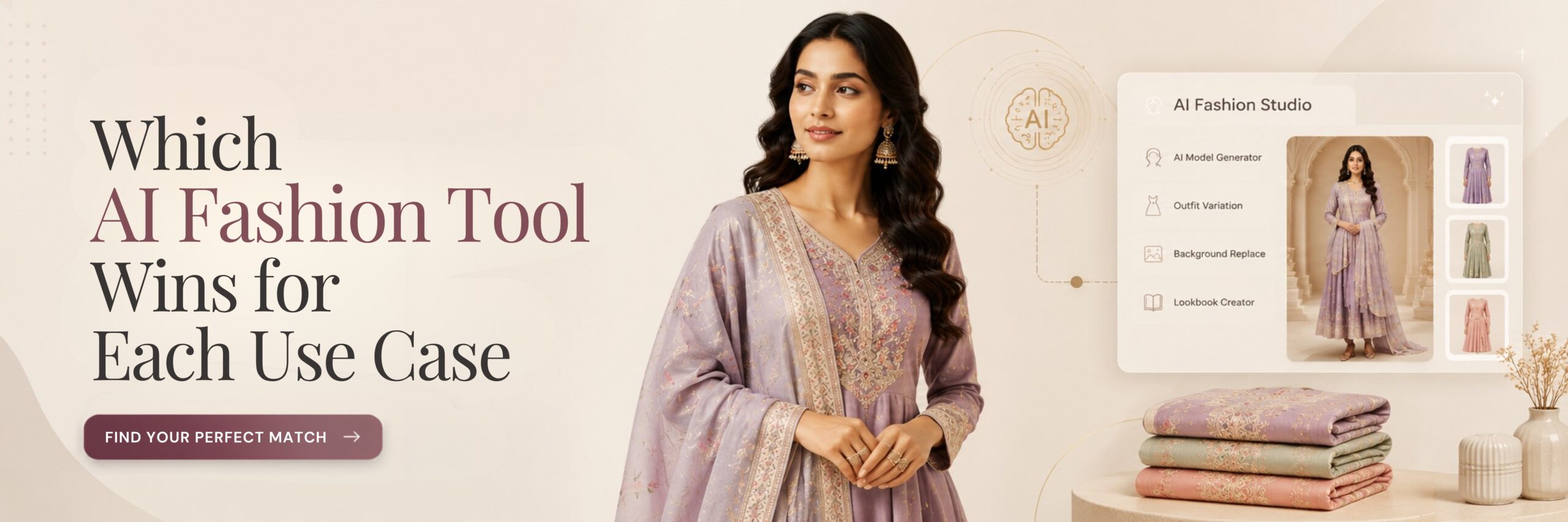
Rather than declaring one universal winner, here’s how the decision typically breaks down by brand type:
Saree and ethnic wear brands — need a tool specifically trained on Indian drape and embellishment. This is where India-specific platforms like AI Vastra have a structural advantage over global generalist tools.
Denim and Western wear brands — global tools often perform adequately here, since these garment types are closer to what platforms like Botika or Pebblely were originally trained on.
D2C brands — need strong model diversity and consistent styling across a growing catalogue, which favors platforms built for repeated, brand-consistent output.
Manufacturers and exporters — bulk processing and export format compliance matter most here, since catalogue volume is high and buyer requirements vary by market.
Our Best AI Tools for Clothing Brands post covers a broader category comparison, while our AI Product Photography Tool post breaks down the specific criteria to evaluate before subscribing to any platform.
How to Compare Tools Yourself
Rather than relying purely on marketing claims, the most reliable way to judge which AI tool is Best for a fashion catalogue in India for your specific brand is to test each platform on your own garments — not generic demo samples. Upload a few of your actual SKUs, ideally including at least one ethnic wear piece if that’s part of your range, and compare the realism and accuracy of the output directly.
Most platforms, including AI Vastra, offer some form of trial access specifically for this reason. Our AI Fashion Photography Software post covers the technical distinctions between tools in more depth if you want to go further before deciding.
The Overall Verdict
There’s no single universal “best” tool — the right choice depends on your product range. For brands working primarily in Western silhouettes, several global tools perform reasonably well. For brands with any meaningful ethnic wear component — which covers a large share of the Indian fashion market — a platform trained specifically on Indian garments, like AI Vastra, is likely to produce more accurate, sellable results. See real examples on the AI Catalogue Photoshoot homepage.
Comments (0)