
 0
0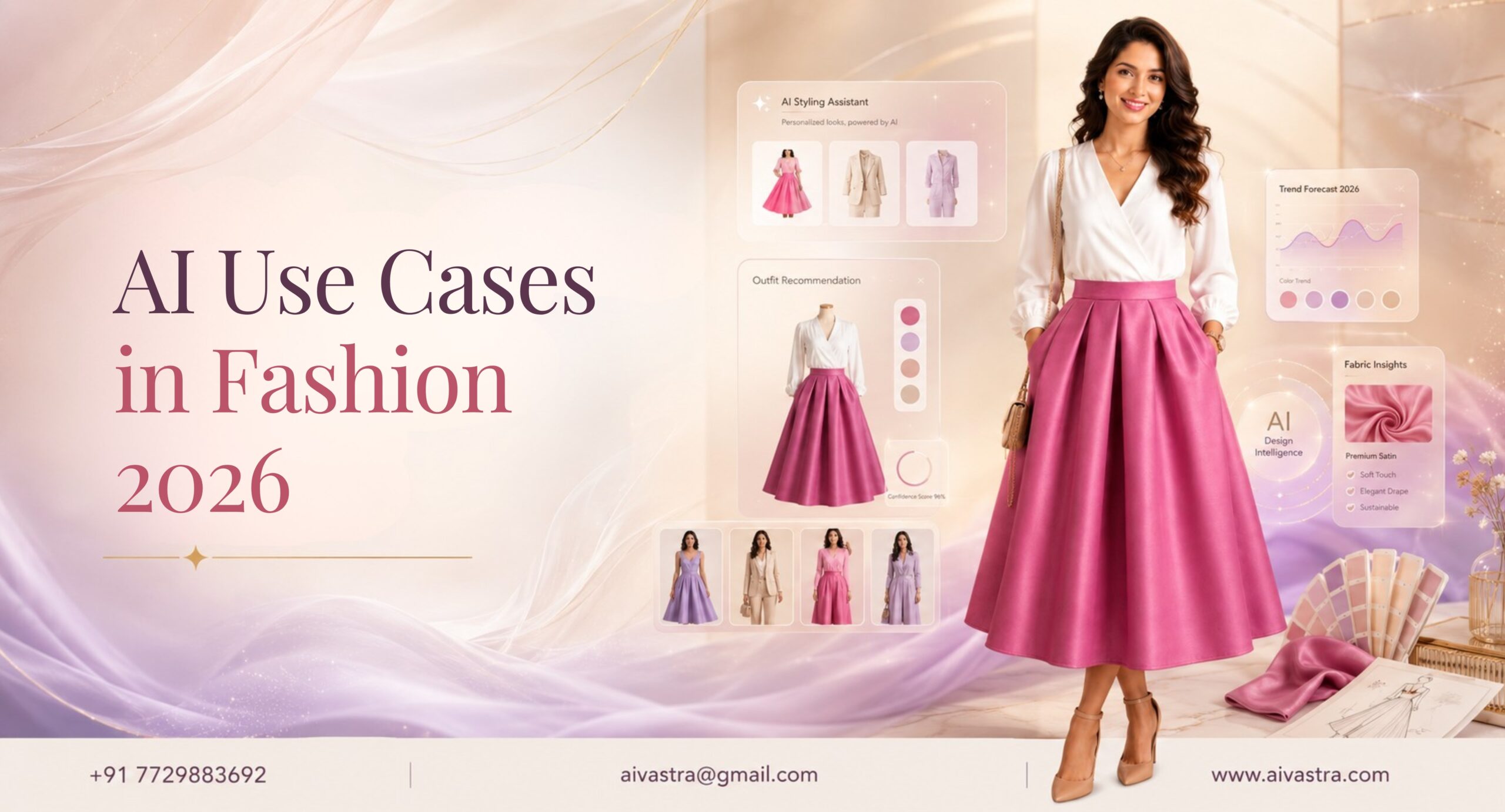
Key Takeaways
- AI is helping Indian fashion brands speed up design, catalogue creation, and product marketing.
- Brands are using AI to create fashion models and product images without expensive studio photoshoots.
- AI-powered virtual try-on helps customers visualize how clothing may look before purchasing.
- AI can generate fashion designs, prints, patterns, and creative concepts faster.
- Fashion brands use AI to create personalized content and product recommendations for different customer segments.
Artificial intelligence is no longer a future promise for Indian fashion — it’s already reshaping how brands shoot, sell, and scale. If you’re tracking Fashion AI use cases 2026 India, here are the seven applications actually being used right now and where each one stands in terms of adoption.
1. AI Catalogue Photoshoots and Model Generation
This is one of the most advanced applications of fashion AI use cases in 2026 India has ever witnessed. Instead of hiring models, photographers, and studios, brands upload flat-lay or mannequin images, then create lifelike models using AI. It can save up to 90% on photoshoot expenses and convert shooting into just hours, reducing the time to weeks.
Indian D2C fashion labels and export houses are leading adoption here since catalogue volume is high and margins are tight. This is exactly the space AI Vastra’s AI Catalogue Photoshoot solution operates in—helping brands generate studio-quality catalogue images without a physical shoot. Compared to traditional shoots, the AI Catalogue vs Traditional Photoshoot comparison shows why this use case is scaling fastest among all fashion AI applications.
Adoption stage: Mainstream and growing fast among SMEs and mid-size brands.
2. Virtual Try-On for Consumers
Virtual try-on allows customers to visualize how the article of clothing will appear on them, or a different body type, before making a purchase. This is one of the important components of AI-based fashion solutions designed to minimize return rates, traditionally an expensive cost center at the Indian eCommerce store.
Larger fashion marketplaces are piloting this, though full-scale rollout is still uneven. For a deeper look at how this technology works, see our Virtual Try-On Technology post.
Adoption stage: Early to mid adoption, concentrated among larger platforms.
3. AI Trend Forecasting and Demand Prediction
It’s a great illustration of how AI is being used in the fashion industry to slash out trial and tribulation. By analyzing search trends, social data, and previous sales, algorithms determine what will be the next best-selling colors, silhouettes, and prints of next season.
Indian fast-fashion brands and private-label brands rely on it to chart production runs and prevent overstocking. It’s one of the less popular but certainly hugely impactful uses of AI for fashion today.
Adoption stage: Growing steadily among larger retailers and fast-fashion players.
4. AI in Fashion Design and Print Generation
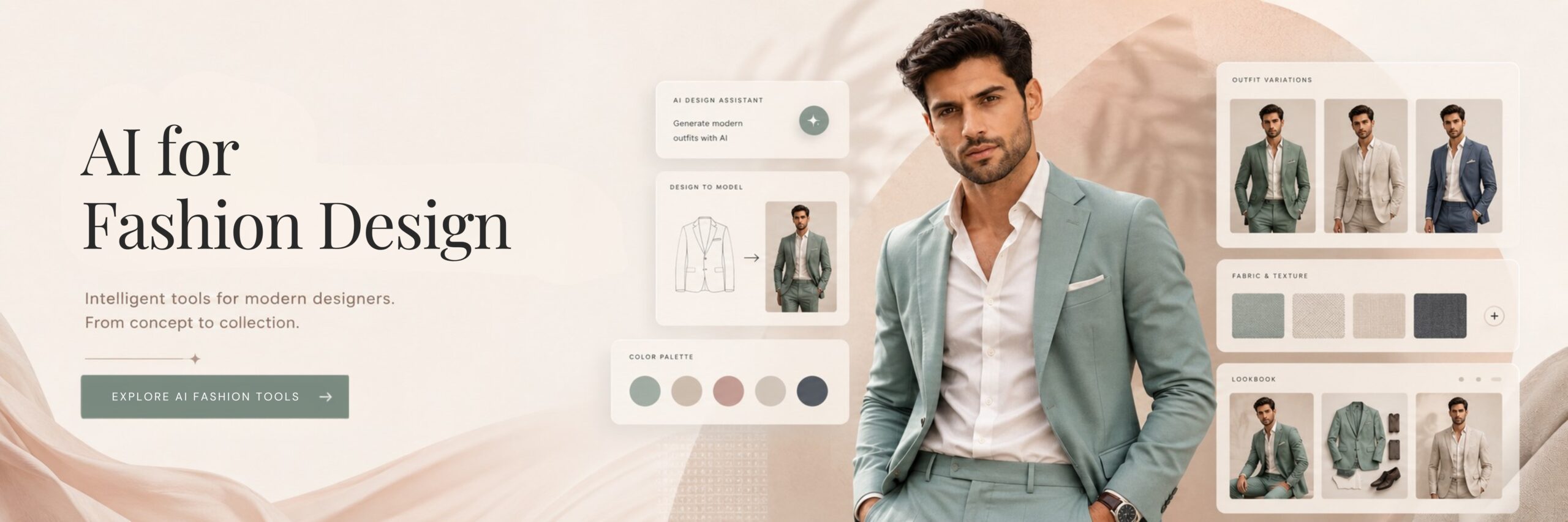
AI tools are now employed by designers to create print designs, color schemes, and even preliminary garment sketches. This helps increase ideas while still letting human designers make the final call.
Adoption stage: Experimental, seen as a creative aid by design studios and large brands.
5. AI in Supply Chain and Inventory
Brands now generate ad variations, product descriptions, and marketing visuals using AI. It’s less visible to consumers but critical to how AI in fashion industry india 2026 is quietly becoming more efficient behind the scenes.
Adoption stage: Growing among larger manufacturers and export-focused brands.
6. AI for Fashion Ad Creative and Marketing
Brands now generate ad variations, product descriptions, and marketing visuals using AI. This connects directly back to catalog imagery—the same AI-generated model shots used for product pages are increasingly repurposed for ad creative, as covered in our AI Fashion Photography Software post.
Adoption stage: Fast-growing, especially among performance marketing teams.