
 0
Salwar Kameez Virtual Try-On: A Complete Guide for Indian Fashion Sellers
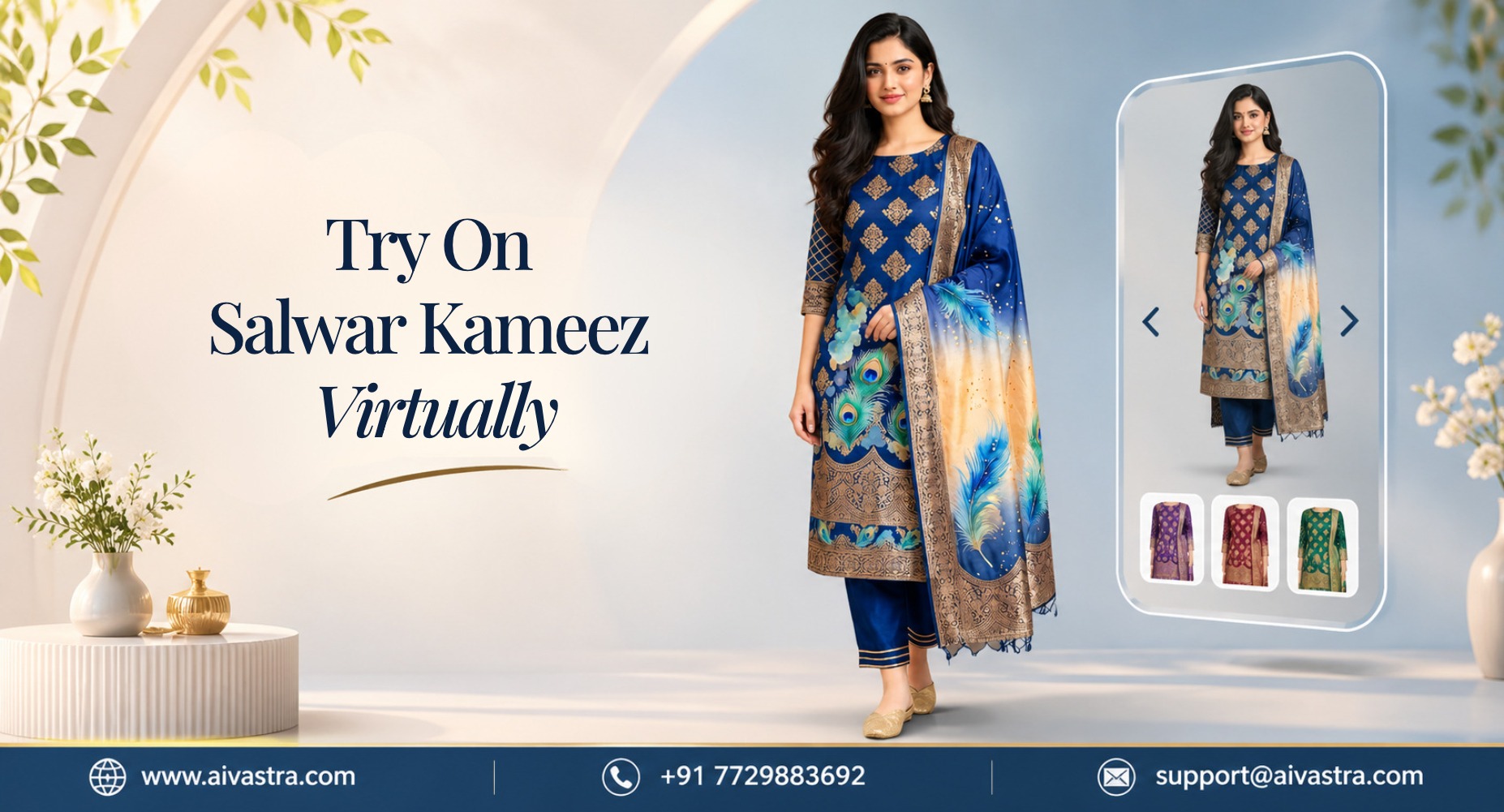
AI Virtual Try-On Salwar Kameez is sold worldwide. UK, US, and Canadian consumers purchase it from Amazon, Etsy, and brand websites, and sellers around North India have thousands of designs available for sale season after season. The challenge is universal: there are three parts of a suit, and taking quality photographs for all three is expensive! Salwar kameez virtual try on turns product photos into model images; that’s the reason the product can have faster listing without a studio.
Key Takeaways
- Salwar kameez virtual try-on creates model images of full suits from flat lay or hanger photos, with no shoot or model booking
- The hard part is coordination: kameez, bottom, and dupatta must match in colour, length, and drape
- Bulk upload and one saved template keep hundreds of suit images consistent
What Is a Salwar Kameez Virtual Try-On?
It means using AI to show a salwar kameez on a model from a product photo. There are two kinds. Brand-side tools create catalogue images for stores and marketplaces. Shopper-side tools let customers preview a suit on their own photo, which our AI Virtual Try-On service covers. This guide focuses on the brand side.
Why Three-Piece Suits Are Hard to Photograph
This isn’t one shirt and a salwar kameez; it’s two shirts and a salwar kameez.
- Colour and print matching. Kameez, bottom, and dupatta should be made to appear as a set.
- Dupatta placement. Over both shoulders, on one shoulder, or around the neck changes the whole look.
- Length and hem. The kameez must sit correctly against the bottom, with slits showing properly.
- Border and embroidery. Fine work needs sharp detail.
- Bottom options. Churidar, palazzo, straight pant, or Patiala each need their own images.
A studio—each additional combination equals more styling time, and that is worth a lot of money when it comes time to pay.
How an AI Salwar Kameez Model Image Is Made
The following are the steps of an AI salwar kameez model image:
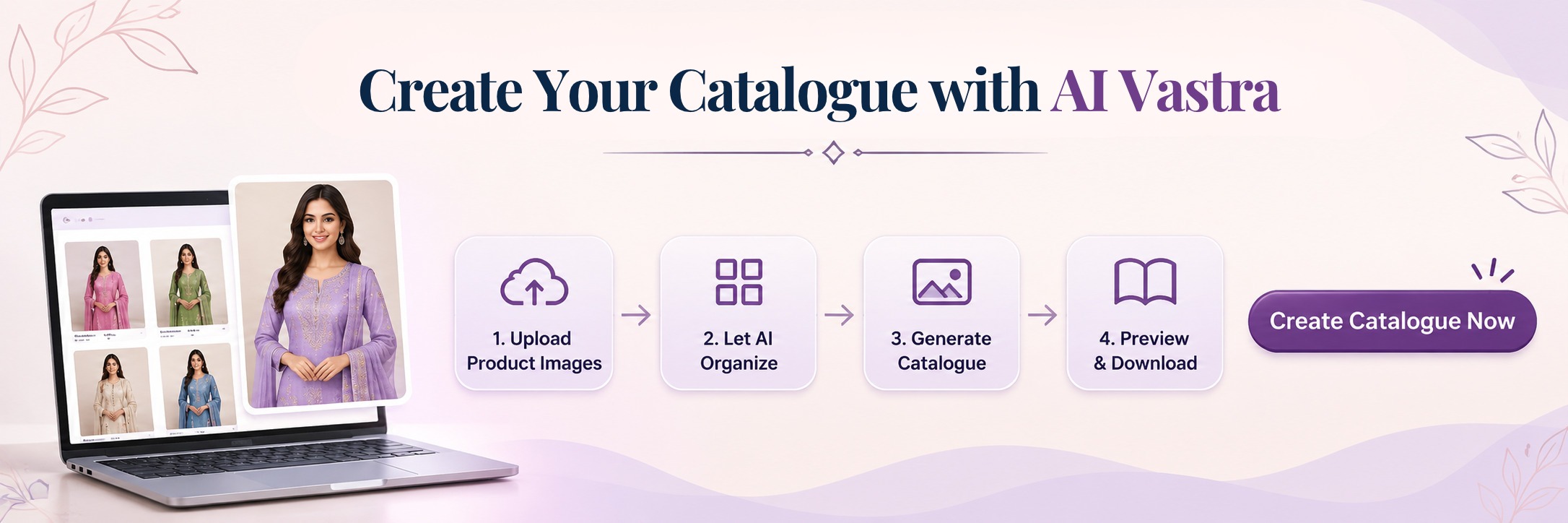
- Upload photos of the kameez, bottom, and dupatta—flat lay or on a hanger.
- Decide on the model type, color, figure shape, and pose.
- Choose color option: white as background for listings, styled for ads.
- Generate and consider the picture.
- Choose the right size for it to download.
[Team: Confirm how AI Vastra handles multi-piece sets and dupatta placement before publishing.]
If you also sell kurtis, our Kurta Virtual Try-On post covers a similar process. Our AI Catalogue for Indian Suits post adds styling tips.
Managing Anarkali and Straight-Cut styles for the Punjabis
Test each style by typing it one at a time, as each reacts differently:
- Punjabi suit—loose salwar or Patiala with pleats, sometimes an embroidered or phulkari dupatta. Pleat and dupatta details need care.
- Anarkali: long, flared kameez. Volume/flow must be voiced naturally.
- Straight cut: Kameez is thin and has a pant or palazzo/churidar. Fit is most important, as is length.
Creating a strong Punjabi suit catalogue AI workflow delivers consistency in the dupatta style and size—this is impossible to achieve otherwise for 100 designs manually.
Salwar Suit Try On Online for Shoppers
Buyers searching for a salwar suit try on online want to see the suit on a body like theirs. Showing several skin tones and body types on your listings helps. For a live preview on your own site, see our AI Virtual Try-On service.
Salwar Kameez Photoshoot AI vs Traditional Shoot
| Traditional shoot |
Salwar kameez photoshoot AI |
|
|
Setup |
Studio, model, stylist |
Upload photos. |
|
New colourways |
Reshoot |
Generate digitally |
|
Bottom and dupatta combos |
Extra styling each time |
Switch digitally. |
|
Time to images |
Days to weeks |
Hours to days |
|
Best for |
Brand campaigns |
Everyday catalogue |
Times are typical, not guaranteed. A studio still suits flagship campaigns.
For North India Sellers: Meesho, Ludhiana, and Bulk Catalogues
Women’s ethnic wear is widely described as one of Meesho’s strongest categories. Seller guides call it the platform’s highest-order category. Salwar suits are named among the ethnic products that attract buyers across ages and locations. The figures are from third-party guides and are typically for kurtis and sarees. The industry, however, is a consistently competitive category alongside suits.
Let’s take the example of a manufacturer in Ludhiana who has 200 suits designed.
- Day 0: Photograph each suit flat. Name files by SKU and prepare a simple sheet.
- Day 1: Upload the batch, choose one template, and generate. Check a sample of about 20 first.
- Day 2: Fix outliers, download the full set, and upload to Meesho, Amazon, and WhatsApp catalogues.
Real timing depends on batch size and photo quality. Check Meesho’s current image rules in the Supplier Panel before uploading. Our Standardized 500 SKUs and Bulk Catalogue Creation posts cover large batches. For wedding and festive suits, see bridal wear, and for sarees and lehengas, see our other guides.
Check Before You Publish
☐ Kameez, bottom, and dupatta colours match the real set.
☐ Print and embroidery look right.
☐ Kameez length and slits are correct.
☐ Dupatta placement looks natural.
☐ Fit looks realistic
Test It on Your Own Suits
Try five designs, including your hardest dupatta, and compare against your last shoot. See examples on the Catalogue Showcase page or start with salwar kameez virtual try on from the Pricing page.