
 0
0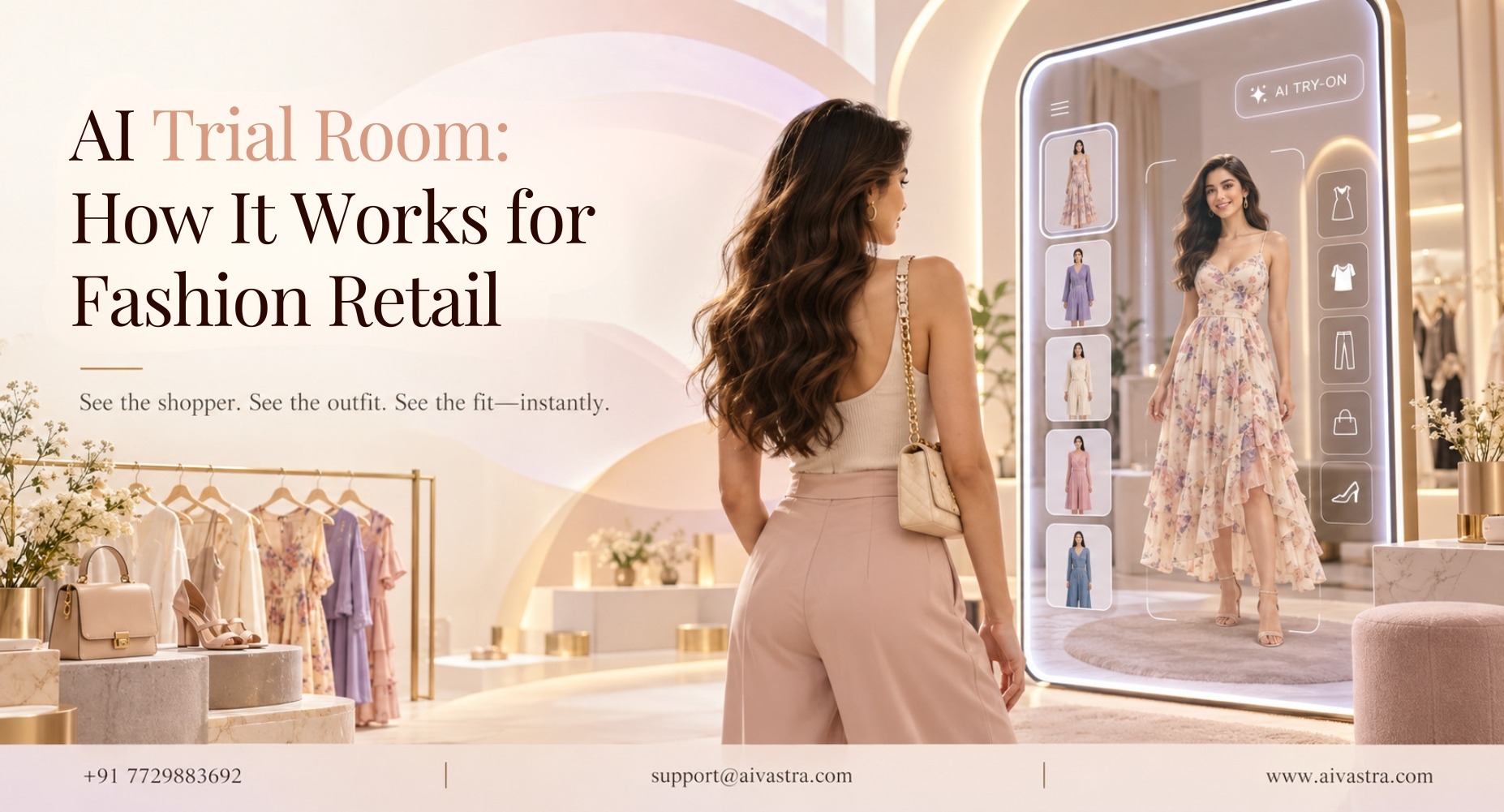
What Is AI Trial Room and How Does It Work for Fashion Retail?
Utility is the final queue that is inevitable in most fashion shops, crowds not getting in their fitting room, having to store a limited amount of clothes in the fitting room and customers not trying on clothes. An AI Trial Room for Fashion Retail businesses are starting to set up solves this problem differently: no physical room needed at all, just a screen and a garment catalogue.
Key Takeaways
- AI trial room fashion retail india stand in place of the traditional fitting rooms or can also complement them with a virtual fitting experience that enables customers to try clothes on virtually without leaving their place.
- They’re very similar in that way, but in-store kiosks and web integrations have different retail use cases, and they’re both addressing the same “problem”: limited or nonexistent physical trial opportunities.
- Hiring a proper Saree fit misfortune specialist is the technology that is providing the best results for Saree stores, ethnic wear boutiques, and D2C fashion brands, where fit and drape projections hold a lot of significance.
What Is an AI Trial Room?
An AI trial room is the digital version of a physical fitting room. Instead of physically changing clothes, a shopper sees themselves wearing a garment on screen, generated by AI, in real time or near real time. The concept goes beyond trying on a single item. A picture is worth a thousand words, and an actual trial room experience is a better way for individual buyers to see a full fleece assortment, try on assorted pieces, and more accurately visualize how a variety of outfits will look on them than merely perusing a product page.
AI Trial Room VS Virtual Try-On?
Virtual try-on generally applies to a single item being tried on at a product page, in a quick, focused, transactional manner. AI trial room online experiences aim for something broader: a full session where a shopper can move through multiple items, compare looks, and shop the way they would inside an actual store, just without stepping into a changing room. Our Webcam VTO post covers the single-garment try-on experience in more detail, while this piece focuses on the fuller trial room concept.
How AI Vastra’s In-Store Kiosk Trial Room Works
For physical retail locations, AI Vastra’s kiosk setup turns a section of the store into a functioning digital trial room. A shopper stands in front of the kiosk, selects garments from the store’s catalogue on screen, and sees themselves wearing each one without touching a single hanger. This is particularly useful in periods of greater traffic as occupation of fit rooms may change often, and the kiosk can be used by more shoppers browsing without the need for the room to be vacated typically.
This is useful for stores where space in the fitting room is limited and they have a big catalogue in store that customers can browse more than they would ever try on.
How the Online Trial Room Integration Works
For e-commerce brands, the same concept moves onto the website. An online trial room fashion India shopper visits sees a “try it on” option integrated directly into product pages or a dedicated browsing section, letting them upload or select a photo and see garments rendered on themselves before adding to cart. Our AI Virtual Try-On service page covers the technical setup for this website integration in detail.
The value here is straightforward: online shoppers can’t physically try anything on before buying, which is one of the biggest reasons for returns in fashion e-commerce. A trial experience does that right in the product page of transactions where the buying decision takes place.
Which retail formats benefit the most from the impact of an AI trial room?
Not every retail format needs this equally, but a few stand out clearly.
Saree and ethnic wear stores — Draping and styling make a huge visual difference, and customers often want to see multiple options before committing. Our Saree Trial Online post covers this use case specifically, since saree shopping benefits enormously from seeing the full drape rendered on a body rather than just laid flat.
Ethnic wear boutiques — Similar logic applies to lehengas, kurta sets, and other occasion wear, where fit and drape matter more than for basic everyday clothing.
D2C fashion websites — Brands selling directly online without any physical retail presence get the most direct return-reduction benefit, since a digital trial room AI India shoppers can use replaces the missing in-person fitting experience entirely.
Cost of Setting Up an AI Trial Room vs. Traditional Fitting Rooms
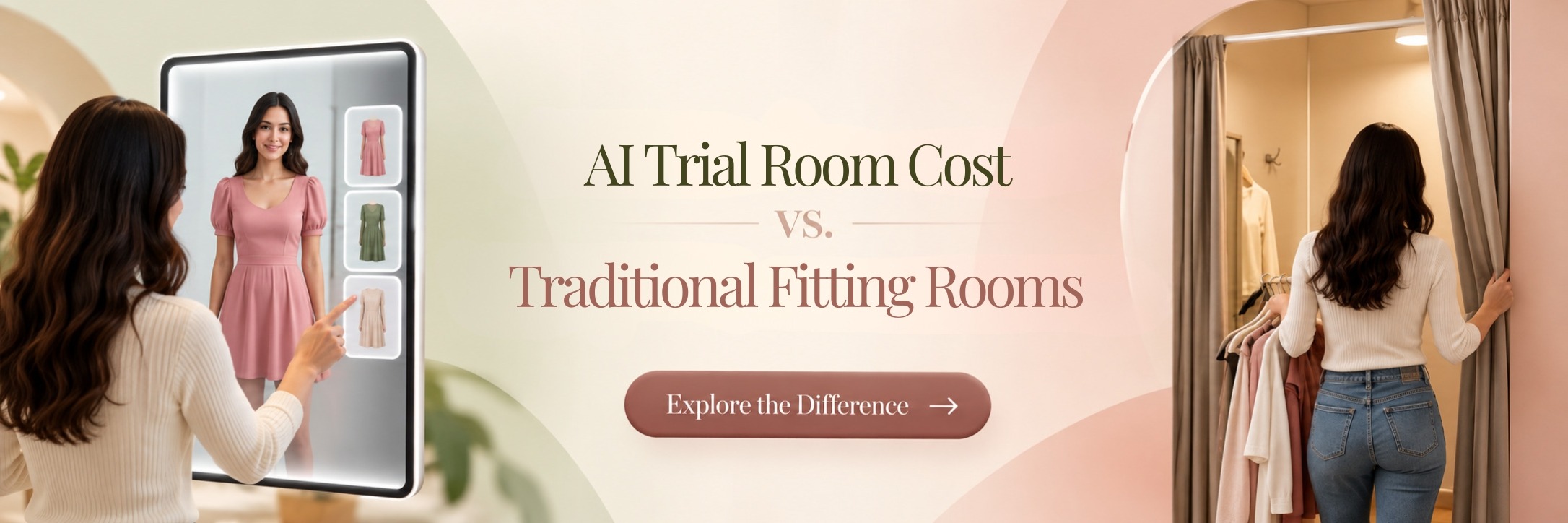
Traditional fitting room infrastructure isn’t cheap when you factor in real estate, mirrors, lighting, staff to manage stock rotation, and ongoing maintenance, all for a space that can typically only serve a few customers at once. An AI trial room, whether kiosk-based in-store or integrated online, requires a one-time setup cost and no ongoing physical space investment, while being able to serve unlimited shoppers simultaneously online, or significantly more shoppers per hour in-store compared to a fixed number of physical rooms.
For growing retail chains especially, this cost comparison becomes even more favorable, since adding trial room capability across multiple locations doesn’t require replicating physical fitting room construction at each site.