
 0
0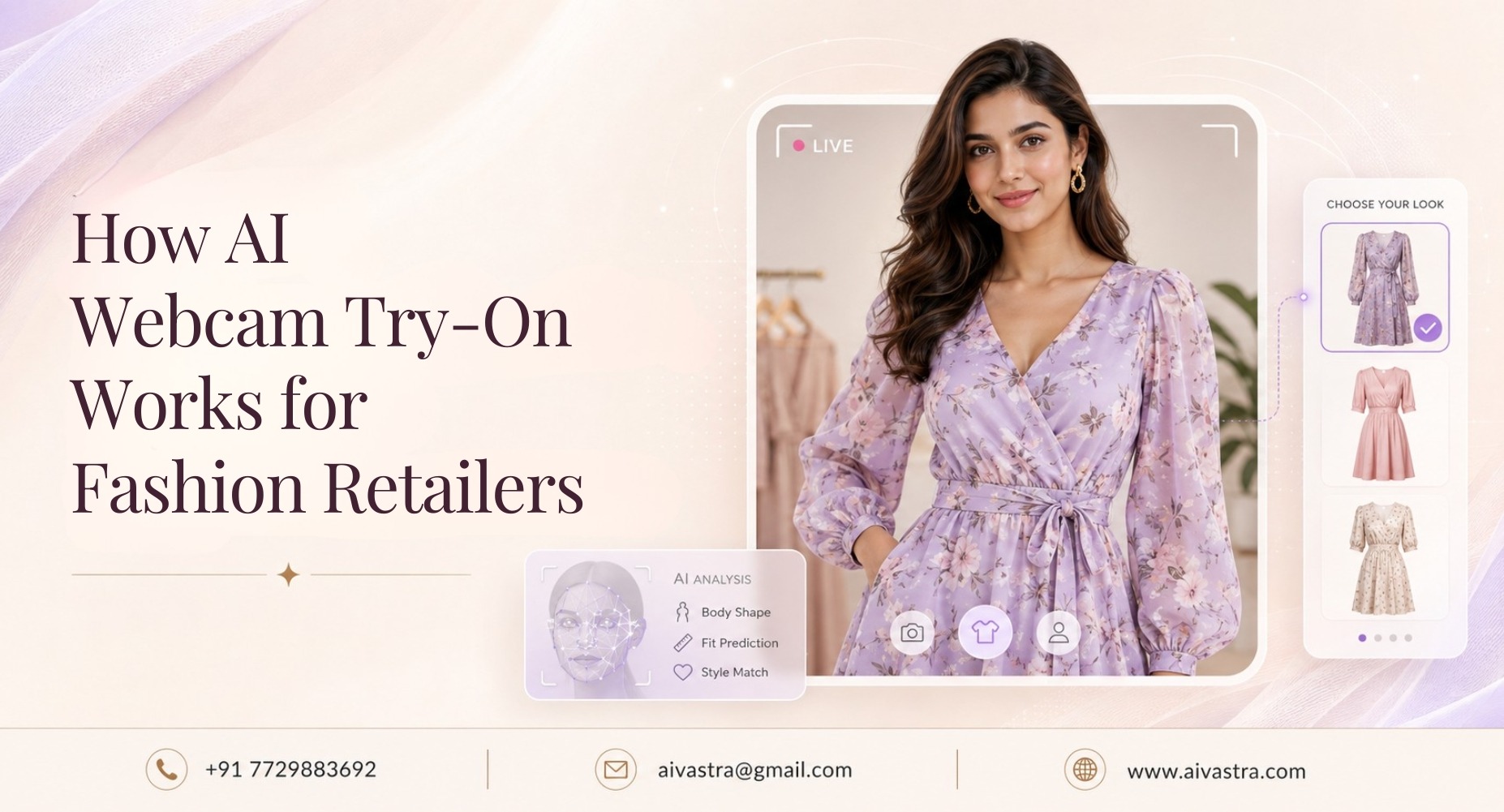
How AI Virtual Try-On via Webcam Works for Fashion Retailers
Shoppers searching for a way to try on a saree without stepping into a store are driving real demand for AI virtual try-on webcam India retailers can now offer, both online and in physical stores. Really even how!
Key Takeaways
- Webcam try-on utilizes a live camera feed to enable a try-on in real time not like photo-upload try-on
- Saree draping via webcam requires more sophisticated real-time body tracking than simpler garments like tops or jackets
- Retailers can deploy the same webcam VTO technology both as an online dressing room and as an in-store kiosk
What AI Webcam Virtual Try-On Actually Is
Webcam virtual try-on works through a live camera feed rather than an uploaded photo. The shopper turns on their camera, the system tracks their body in real time, and the garment is overlaid live as they move — creating an interactive try-before-you-buy experience without needing a physical fitting room.
This is different from photo-upload try-on, where a shopper uploads a single image and receives one static result. Webcam try-on is continuous and live, which makes it feel closer to an actual trial room experience.
How Webcam Try-On Differs From Photo-Upload Try-On
Photo-upload try-on processes one image at a time and generally produces higher accuracy per image, since there’s no real-time tracking constraint. Webcam try-on trades some of that per-frame precision for interactivity — shoppers can turn, move, and see the garment update live, which builds confidence in a different way than a single static image does.
Our VTO Technology post covers the core mechanics behind both approaches in more detail.
How Saree Webcam Try-On Works Specifically
Saree webcam try-on is technically more demanding than trying on a simple top or jacket. A saree’s drape, pleats, and pallu movement all need to track and adjust as the shopper moves in front of the camera — this requires more sophisticated body and fabric tracking than a fitted, simpler garment.
For Indian saree webcam implementations to feel realistic, the draping logic has to account for six yards of fabric behaving naturally in real time, not just a flat overlay following body position. This is a significant technical step up from webcam try-on for basic Western wear. Our Saree Trial Online post goes deeper into how draping accuracy is achieved specifically for sarees.
What Retailers Need to Implement Webcam Try-On
Getting a virtual trial room online running requires a few components: website integration (for online stores) or kiosk hardware setup (for physical retail locations), camera access permissions, and a backend system capable of real-time garment rendering.
For online stores, this typically means embedding the try-on feature directly into product pages. For physical stores, it means setting up a kiosk with a camera and display, letting in-store shoppers try on garments without changing clothes physically — useful for high footfall periods or reducing fitting room wait times.
Ideal Categories for Webcam vs Photo Try-On
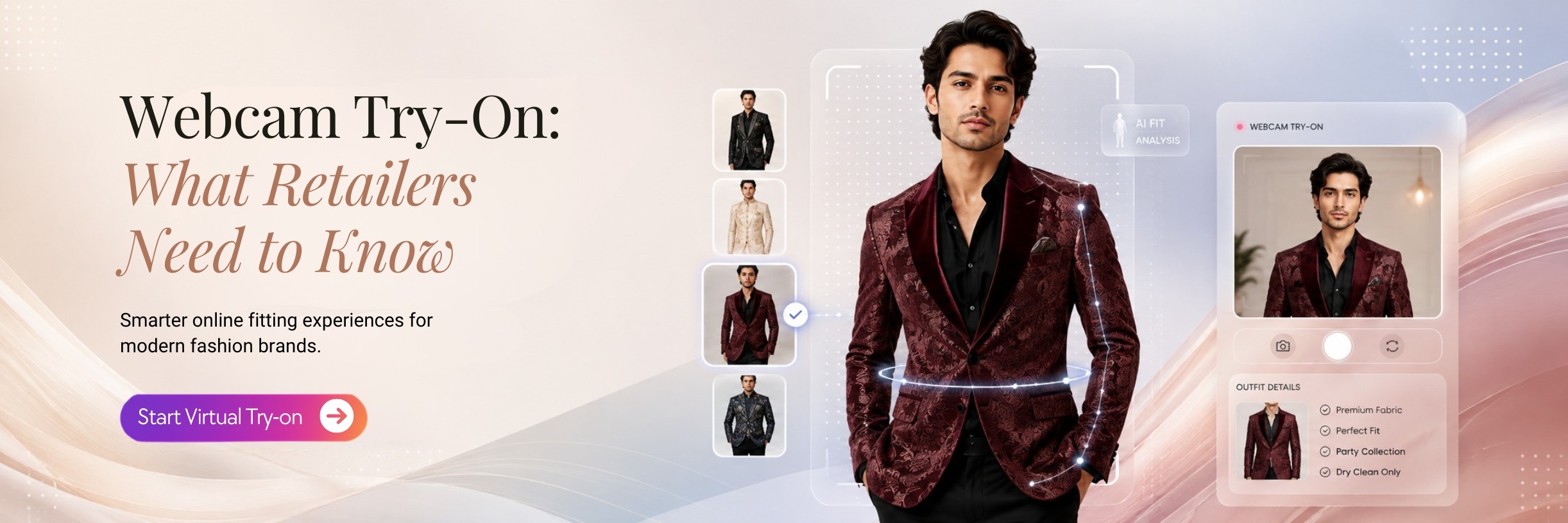
Webcam try-on works best for garments where movement and live interaction add real value — sarees, dupattas, and flowing ethnic wear benefit from seeing how fabric moves. Photo-upload try-on tends to work well for simpler categories like tops, jackets, or fitted wear, where a single accurate static image is sufficient for a purchase decision.
Retailers building an online shopping virtual dressing room should consider offering both options depending on their product mix, rather than treating one as a universal replacement for the other.
How AI Vastra’s Webcam VTO Works for Online and Offline Retail
The same underlying AI virtual try-on webcam India technology can serve two different retail contexts. Online, it integrates directly into a brand’s website as a dressing room feature customers access from home. Offline, it runs as an in-store kiosk, letting walk-in customers try on garments digitally without waiting for a fitting room or changing multiple times.
This dual deployment is part of what AI Vastra’s AI Virtual Try-On service page covers, alongside how it compares to catalogue-based imagery in our VTO vs AI Catalogue post.
How Customers Use It: In-Store vs Online
Online, customers typically use webcam try-on before adding an item to cart, reducing hesitation and return rates. In-store, it functions more like a queue-reduction tool — customers can quickly preview multiple garments on a kiosk before deciding which to physically try, speeding up the overall shopping experience during busy periods.