

 0
0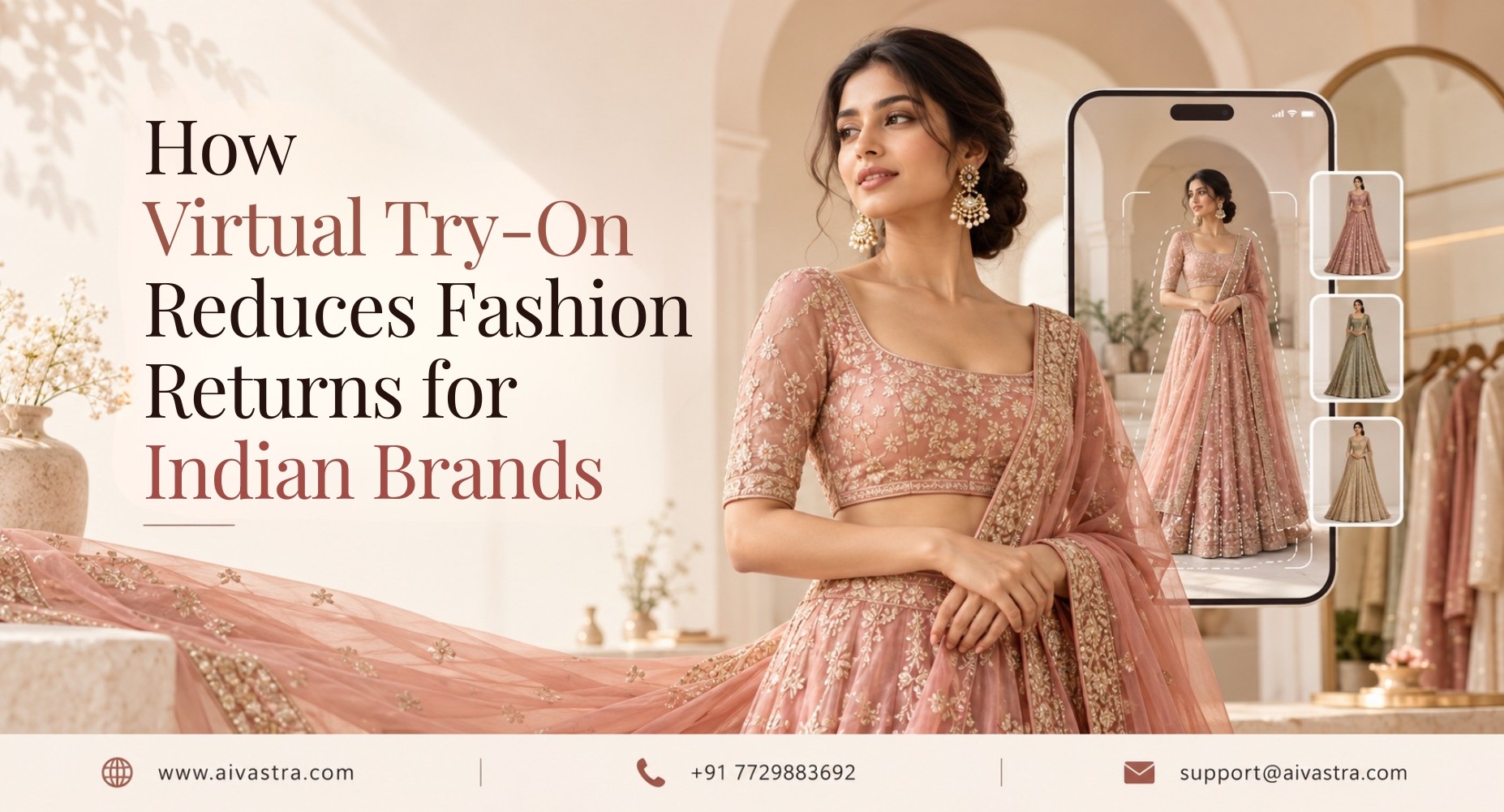
Virtual Try-On Cuts Return Rates by 40% – India Data for Fashion Brands
Returns are the quiet margin killer in Indian fashion e-commerce. For brand owners trying to understand exactly how much virtual try-on reduce return rates India fashion sellers deal with the data is now being clear enough to act on.
Key Takeaways
- Based on real industry evidence, Virtual Try-On lowers the RTOs of the fashion sellers in India by 20-40%—which addresses the three primary reasons for returns: color mismatch, size uncertainty, and drape expectations the top three return causes:
- Perfetto anticipates a 10 percent return rate drop on Rs 10 lakhs monthly sales retaining roughly Rs. 1 lakh in orders that would otherwise come back, before counting added logistics savings.
- If the category-specific accuracy is not high enough, the next aspect that could influence the Indian ethnic wear in the ROI to a considerable degree is the way generic international virtual try-on tools render dresses, especially the draped ones like sarees, lehengas, and ethnic wear.
India’s Fashion Return Rate Problem
Indian fashion e-commerce consistently runs among the highest return rates of any online retail category. Multiple industry sources put overall apparel return rates on Indian marketplaces in the 25% to 40% range, among the highest of any product category sold online in India. For context, this means roughly one in three to one in four fashion orders comes back.
There are probably significant changes within that general category. Sarees and draped ethnic clothing usually come with a higher price point because of drape and fit, which cannot be accurately measured in a static picture, while nice structured clothes for the western style come with a slightly lower price. Specific category numbers should not be considered exact splits and are not always reported in sources, so the figures should be regarded as directional—you should always check them against your own order data.
The Three Biggest Return Reasons in Indian Fashion
For Fashion return rates India 2026 data to be actionable, you need to know what’s actually driving returns, not just the headline number. Three reasons consistently top the list:
- Colour difference from screen — what shows on a phone screen often doesn’t match the actual garment color in hand
- Size and fit uncertainty — a DealNews survey found 65% of online shoppers have returned an item specifically because it didn’t fit, more than any other single reason
- Drape not matching expectations — especially relevant for sarees and lehengas, where how fabric falls and moves is nearly impossible to judge from a flat product photo
How Virtual Try-On Addresses Each Return Reason
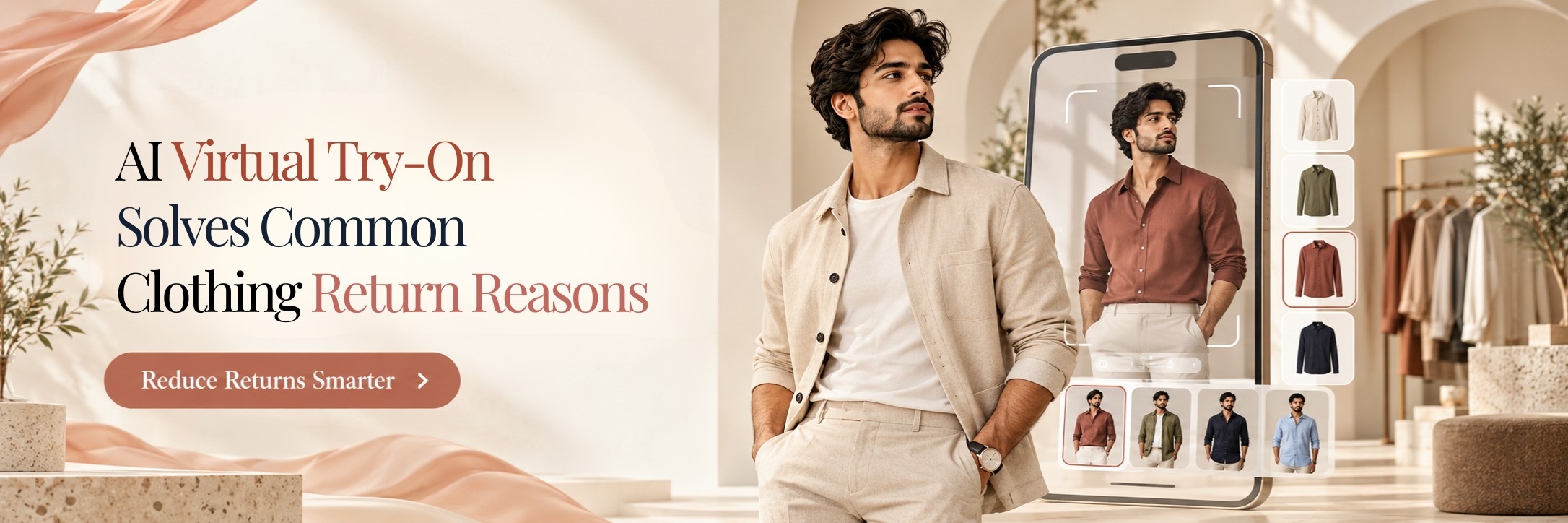
This is where AI virtual try-on returns data India brands are seeing starts to make sense. Virtual try-on reduce return rates India fashion, directly targeting all three causes at once. It applies to the way the garment drapes over an avatar/mannequin body, making drape and silhouette issues. It allows customers to visualize how the fit will look on them without the added worry of the size issue. It is suitable for showing color as it appears in context when applied properly, and a flat product shot is not suitable.
Real data backs this up. DRESSX’s platform, used across a wide range of fashion brands, reports a 30% reduction in returns alongside a 40% lift in conversion rate for brands using its Virtual try-on tools. Separately, DRESSX’s industry intelligence report, covering over 1.2 million shoppers, found virtual try-on users were 50% more likely to purchase and viewed seven times as many products before deciding. Google’s own data separately shows listings with virtual try-on images get 60% more high-quality views on Search.
What a 10% Return Reduction Means Financially
Here’s a concrete calculation for a brand doing Rs. 10 lakhs per month in fashion sales, assuming a 30% return rate (within the documented 25-40% range for Indian fashion):
- Current returns: 30% of Rs. 10 lakhs = Rs. 3 lakhs in returned orders monthly
- A 10 percentage point reduction (from 30% to 20%, well within the 20-40% range DRESSX and other sources report) = Rs. 1 lakh in orders that now stay as completed sales instead of returns
- Beyond the direct sales retained, each avoided return also saves reverse logistics, repackaging, and processing costs that compound this figure further
This is before counting the conversion lift virtual try-on tools typically bring on top of the return reduction. Our How Better Catalogue Images Cut Fashion Return Rates post covers how catalogue quality compounds this effect even further.
How AI Vastra’s VTO Addresses Indian Fashion Returns Specifically
Generic virtual try-on tools built for Western fashion often don’t handle Indian garment categories well. AI Vastra’s try-on technology is built to address How to cut clothing returns India sellers actually face: accurate saree and lehenga draping, realistic rendering across Indian skin tones, and support for layered ethnic wear sets that generic international tools typically render poorly. The technical details are explained on our Virtual Try-On service page, and an additional post about the various fashion brands’ use of virtual try-ons and conversion data in India.