
 0
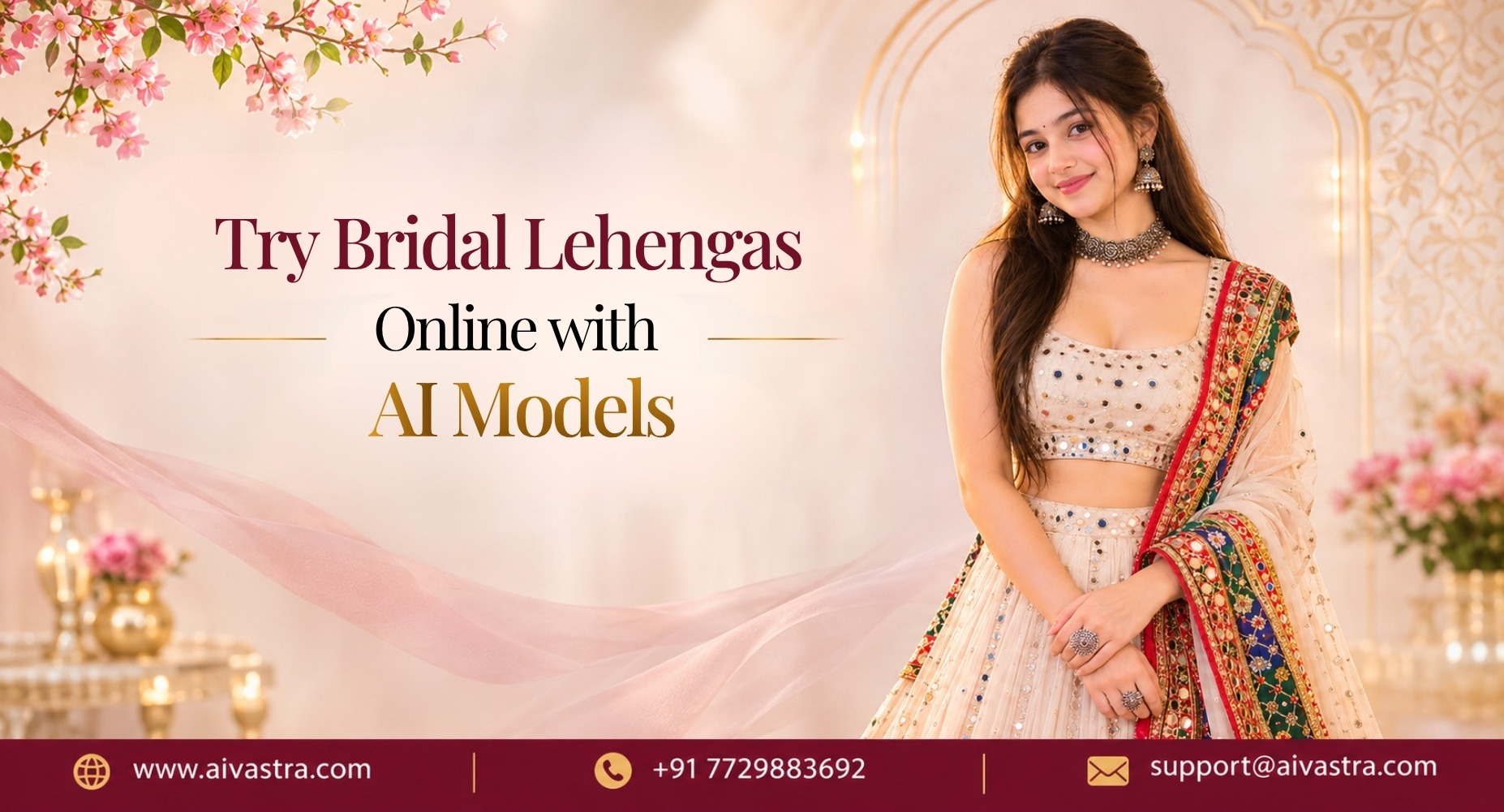
Lehenga Virtual Try-On: How Bridal Wear Brands Show Lehengas on AI Models
To photograph a bridal lehenga properly can take several hours. They all require attention when it comes to styling, whether it be heavy embroidery, layered skirts, intricate borders, or dupatta draping. With a conventional photoshoot, this can simply translate to 10 models, each wearing one of 10 designs of the same brand—that is, 10 outfits, 10 models and 10 photographers, 10 sets of editing software, and maybe 10 hours of studio time.
The elaborate fashion show and marketing are other approaches that Lehenna virtual try on provides to fashion brands. With the help of AI-based tools, product photos can be transformed into model photos in order to demonstrate designs in various models and offer color options without having to set up a complete photo session for all the colors.
This is crucial in unfortunate times during the busy wedding season for bridal brands worldwide. AI can be leveraged in India’s textile cities like Surat to create product listings on websites, social media, and online platforms like giants like Amazon, Flipkart, and eBay.
AI Vastra can create virtual try-on content and AI-driven catalogue visuals for fashion businesses. How the technology works and where it can help, but also what brands need to be wary of before employing the images.
3 Key Takeaways
- Minimize redundant photoshoots by generating more catalogue images from product photos with AI.
- Display lehenga variations: Strive to showcase various colors and cuts without shooting multiple looks of the lehenga.
- Preserve embroidery and fabric texture: Ensure that details of the product are not lost in the embroidery or careful quality checking to prevent any alteration in the shape of the lehenga.
Why Lehenga Photography Is Challenging for Bridal Brands
Lehengas tend to be more intricate than regular clothes or garments. All of their shape, decoration, and styling have an impact on the final image. They are determined by this.
Heavy embroidery and fabric details
Bridal lehengas may have some zari work, sequins, beads, thread embroidery, mirror work and elaborate borders as well. These aspects assist subscribers to assess the layout and worth of the style.
Low light and lots of editing can highlight or mask finer details, and, overuse can cause the fabric to appear smooth or altered in colour. Images created with AI should do more than generate a new image or take out key parts of the design. AI-generated images need to have the design showing up, not making up any patterns or even eliminating key details.
Volume and skirt shape
The lehenga has a wide skirt, which creates a full silhouette. How the fabric spreads, folds and falls may effect the overall look of the garment.
A flat-lay shot can look great capturing the embroidery and is often not the best way to articulate a skirt when in use. Even when the AI-generated images are accurate representations of the original garment, they should also capture the overall shape of it, which can be displayed in model images to help customers visualize the garment before ordering.
Outfits—Dupatta Drape and Style
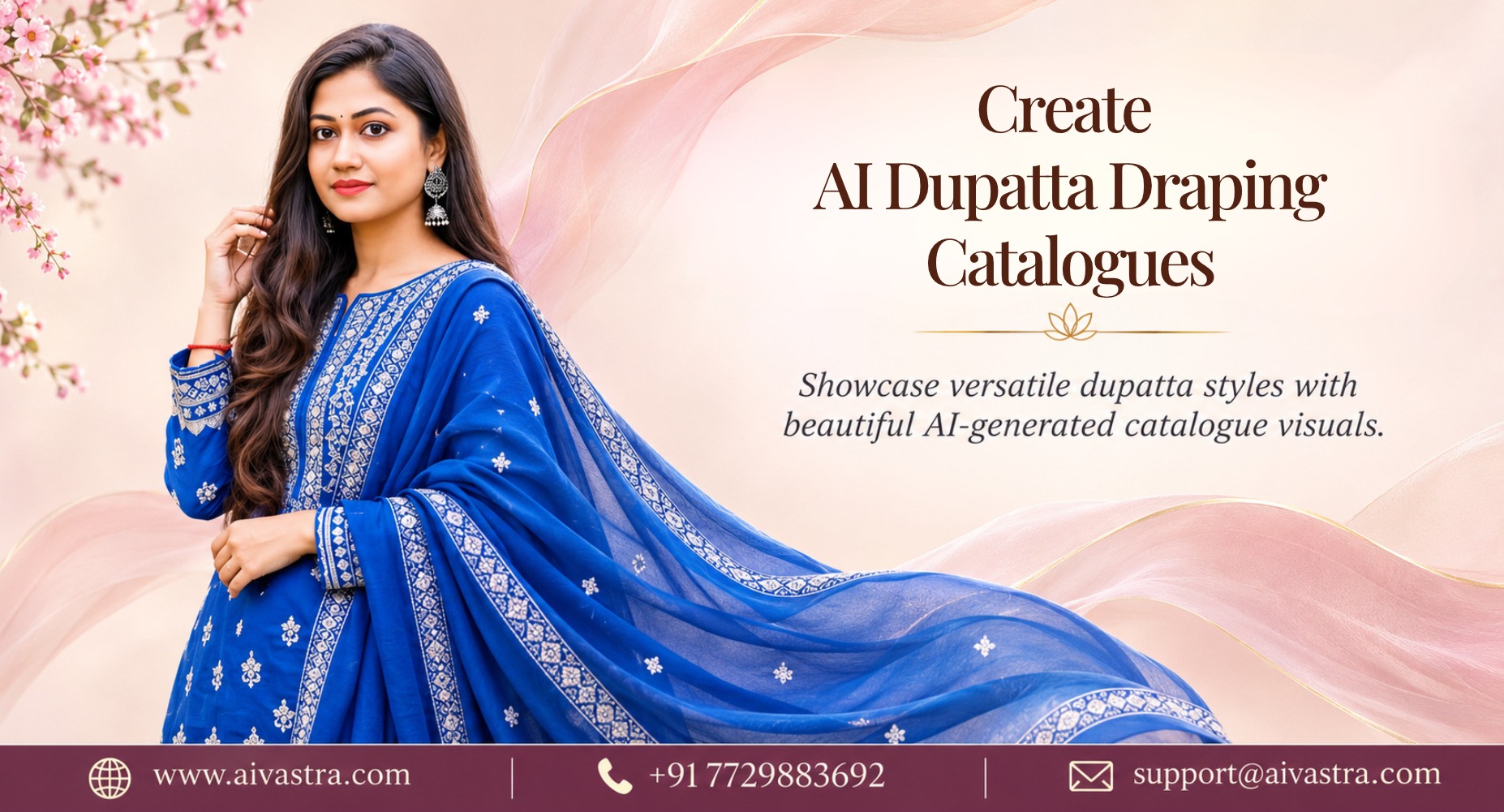
A dupatta is a fabric that can be worn over one shoulder, across both shoulders, or over the head. Both styles affect the appearance of the outfit in the catalog.
In traditional photos, posing and re-shooting is used to produce various looks. Using the AI skills of a workflow can be useful in creating further presentations, but complicated drapes might require manual review to avoid any misfolded or missed borders.
For brands with a focus on Lehengas, these aspects are crucial, as customers have to see both the design and the presentation of the garment.
AI Resolving Frequent Challenges in Lehenga Photoshoots
The best thing about it for many brands is the opportunity to offer more looks without necessarily having to duplicate each step of a typical shoot.
Suppose there was a bridal label that sold a lehenga in four colors: maroon, wine, emerald
Make more variations in color.
green and royal blue. Generally, photography for each color is likely to be needed in a traditional workflow.
The brand can leverage relevant product images to create more Catalogue visuals with AI assistance. This could limit the need to book the same model again and again and to have to go in the studio.
But you will need to pay attention to colour accuracy. The AI must not alter the color of a maroon lehenga to another hue or add to it any designs that are not present in the original lehenga. If the fabric or embroidery is different for the variants, each variant should be based on an accurate source image.
Demonstrate various aspects of the model.
Brands can choose to showcase an entire Collection with a variety of models in various poses and catalogues. Brands can opt to feature a whole range of models in varying poses and catalogues. Depending on the tools and their capabilities, AI can be used to generate more diversity of visuals.
It adds a more complete picture to the customer of the kind of items and/or images that will appear in the collection on a potentially large variety of catalogue images. Though, brands should still make sure that output is produced in a natural appearance and is close to the garment.
Minimize pressures to production during the wedding season
There can be very tight deadlines for new collections during the wedding season and at high holidays. Some Brands might find they have product images required while promoting them in ads, across social media and for listings on Marketplaces.
AI can aid teams to create other visuals from already-used product photos using catalogue production. It’s not a replacement for good source images or final checks, but it can help to make the process easier to handle.
How AI Vastra Handles Embroidery and Fabric Detail
However, for bridal brands, attractive pictures alone don’t suffice. The garment has to be still appear as the product that the client will receive.
AI Vastra’s AI supports creating fashion catalogues from product photos. This can assist brands in prepping up images preveled solely on model, without creating a standard shoot for each present.
There are five checks in creating ai lehenga model images; brands should concentrate on those five checks:
- Embroidery: Do the original motifs, borders and decorative patterns remain?
- Fabric texture: Is the texture of the fabric true or does it appear too smooth or man-made?
- Colour: Do the created photos closely resemble the product colour?
- Silhouette: Will the skirt have volume and shape?
Consistency with originality of the visible details between Dupatta and blouse.
Begin Your Product Photography With Bright and Clear Pictures.
It is important to make sure that the full skirt, blouse and dupatta are seen where possible. Look at images created in review mode before adding to the store.
None of these AI tools can be relied upon to maintain the integrity of every stitch or fabric detail. Go back through the images when a key product detail has been altered, correct it or utilize a much better source image prior to releasing it.
This review step will give confidence to the customer when purchasing Bridal Wear, and minimise uncertainty about its actual contents.
Before and After: An Example of an AI Lehenga Catalogue
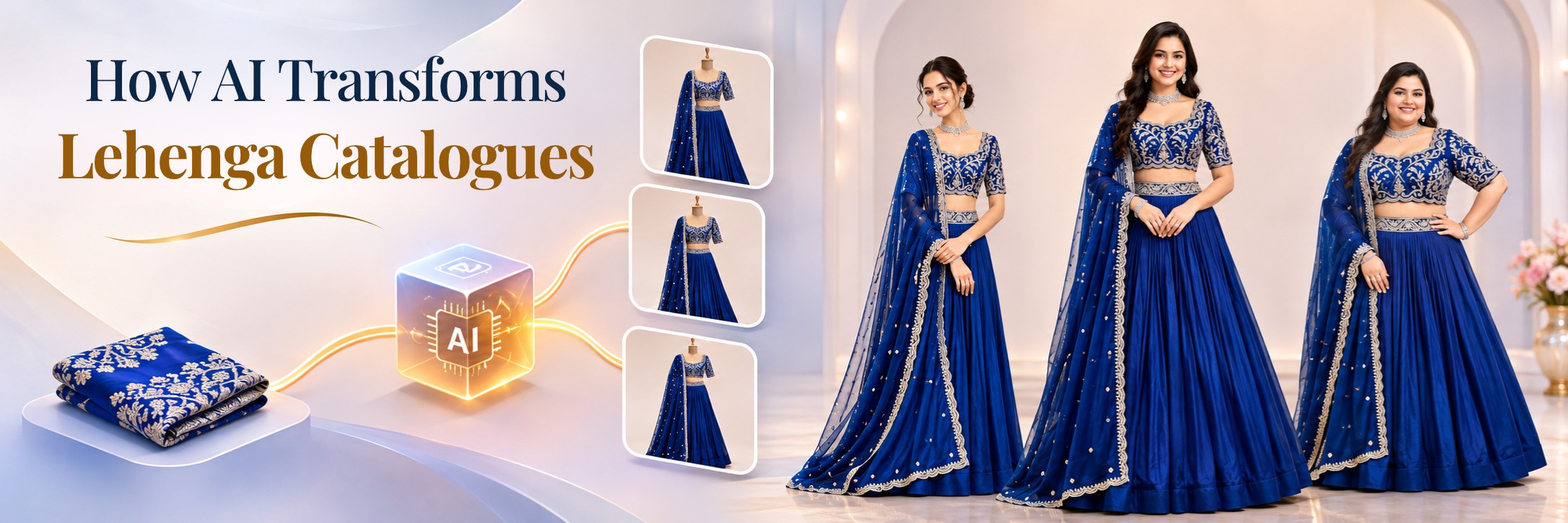
Let’s say you tell a Surat bridal seller, that you are getting ready for the wedding season and have thought about buying 4 lehenga lattices based on its colour?
Before: The seller works with models for photography according to the colours, arranges the styling of the models and drapes the dupatta as well and waits for editing. In order to get the number of looks desired for the team, it might require more photography.
After: Images of actual products are clearly defined with the start of the selling process and use a catalogue workflow with AI for product images. The team checks embroidery, colours, skirt shape and style before placing their pictures on their listings.
This is a hypothetical case scenario—it’s not a measured case study of a customer. The actual time and cost savings vary based on image quality, image collections, revisions, as well as tools employed.
This strategy can also be used to help D2C bridal brands collect their web pages and marketplace sellers fill out product pages more quickly. Before listing AI-generated images, sellers involved in different platforms like Meesho must also read and understand the image policy followed by the marketplace at the moment.
Bridal Lehenga Catalogue AI: Global Brands & Indian Sellers
AI Product Photography is beneficial in more than one market. International home-run brands for bridal wear and occasionwear may require a consistent image across websites, social campaigns and for various sets of customers.
A team’s shared visual workflow can assist with creating more catalogue options without affecting the look and feel of the catalogue as presented. The disclosure or labeling of generated imagery should be done by brands when required to do so by local rules or platform policies.
Why it would matter for Indian bridal businesses
Surat is an important textile hub for the manufacture and wholesale trade of ethnic cloth and has a large ethnic wear market in India. Representing various designs and colour options on numerous online channels are often necessary for local manufacturers, resellers and d2c brands.
AI for a bridal lehenga catalogue can assist these companies in creating product visuals without having to schedule an entire photoshoot for each catalogue showcase. It might be especially beneficial if new styles are coming alongside Diwali or the major wedding season.
A catalogue approach is useful for other ethnic wear like Sarees if brands require uniformity in the fashion appeal of products in a larger range.
AI Catalogue Images: A mutually beneficial relationship between AI and photography in 2026.
From now on, fashion can be searched on search engines, shopping sites and social media, AI assistants. ChatGPT, Google AI Overviews, Gemini AI, and Perplexity are AI powered resources that can help the user search for styles, compare products, and identify brands.
Producing AI images will not ensure being seen in these lists. Brands want information about their products that is useful and content on their website that makes sense.
Apply these helpful strategies:
Create product detail pages. Write about the colour of lehenga, its fabric, type of embroidery, blouse parts, care factors of dupatta (if known), available sizes etc.
Replace blurry names and ALT tags on pictures. State what is actually being displayed, e.g. “Maroon Bridal lehenga with Gold Embroidery.” Avoid including irrelevant keywords.
Be consistent with product information. Make sure that the same product is featured in the description, price, on-hand availability, colour options and images on the product page.
Add useful FAQs. Respond to basic inquiries regarding fabric, fit, delivery, customisation and returns. Direct answers may help shoppers in the store and be more comprehensible to search engines.
Employ structured product information. Use correct product structured data where applicable and ensure that it is consistent with the text on the page. This can aid search engines in understanding the features of the products, but will not help provide a rich result or AI citation.
These measures can encourage (or facilitate) Generative Engine Optimization (GEO) by helping users navigate product data to find, understand, and validate it more easily. The end goal is to assist actual customers in making decisions, not in guaranteeing the ranking of answers that are automatically compiled.
How Much Does AI Lehenga Catalogue Creation Cost?
The price varies depending on the number of images, degree of editing required and the workflow that a brand utilizes. While AI catalogue creation can save on the recurring investment element, brands should consider the entire process, not just the cost of creating images.
Information about catalogue plans is included on AI Vastra’s Pricing page. Review package limits and pricing to ensure that you are selecting the right option before it is too late.
The easiest and most convenient criteria for measuring value is to take one of the conventional photo shoots and compare the price of the complete conventional chains of actors leading up to source image preparation, generating images, reviewing, making corrections, and doing the retouch, if needed.
Create your own bride and groom’s party journal with AI-powered Vastra.
Bridal brands require catalogue images of the beauty of every design without any production delays. AI workflows can help them present various colour options and modulation visuals while minimizing repetitive photoshoot effort.
A balance of good product photography with intelligent AI image checking is where it’s at for labels, brands, D2C manufacturers, and online merchants from Surat. The embroidery, texture of the fabric, colour and drapes should all remain faithful to the garment.
Check out the AI Vastra Catalogue Showcase to get an idea of its catalogue approach, or visit the Pricing page to see which catalogue plans are available for your business.