
 0
0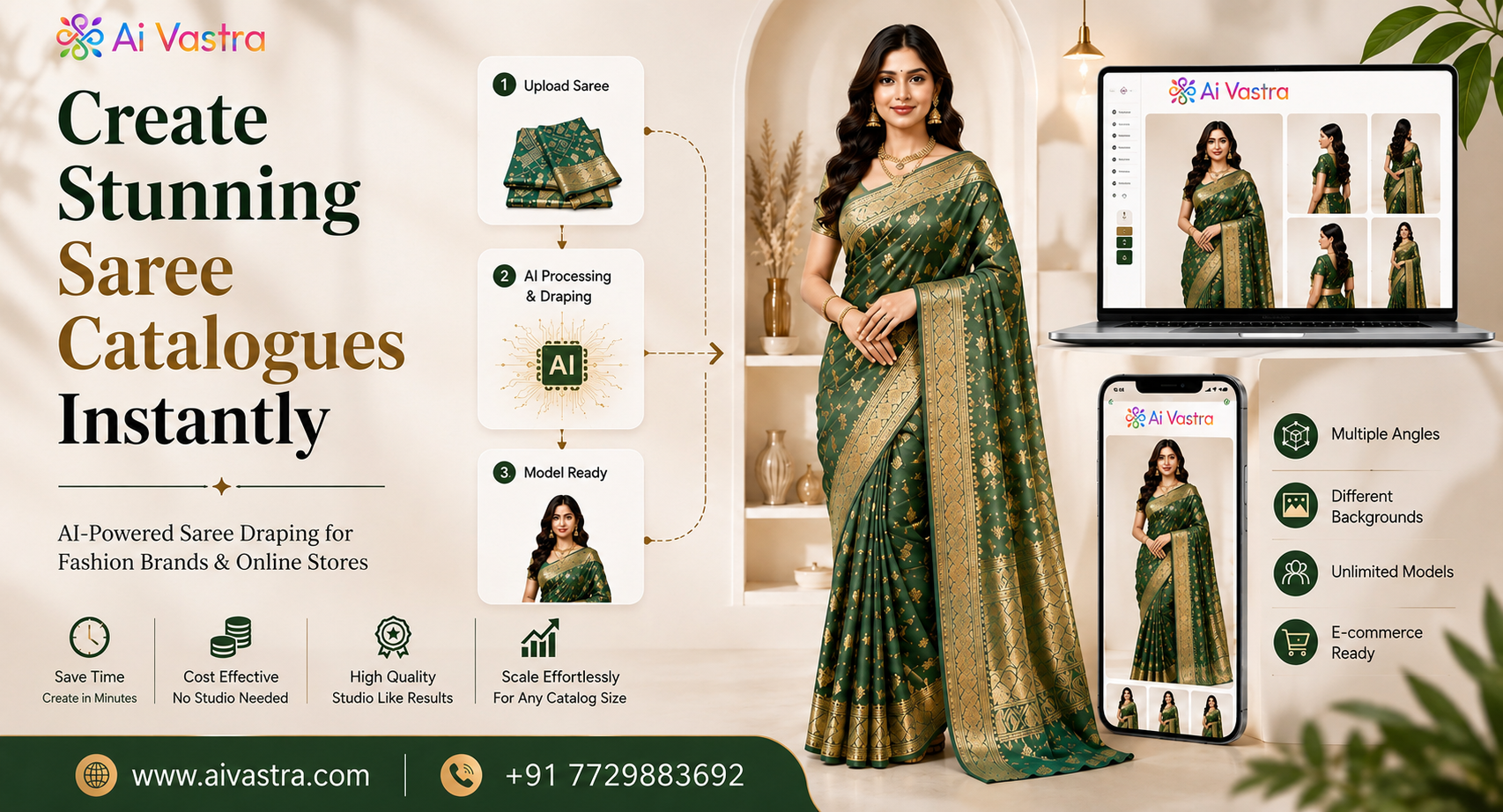
I used to dread new collection launches.
Not because the sarees weren’t beautiful. They always were. The problem was everything that had to happen before a single product image went live on Myntra or Meesho.
Book a model. Find a draper who actually knows how to drape a Banarasi differently from a georgette. Hire a stylist. Coordinate a photographer. Book a studio. And then pray nobody cancels the morning of the shoot.
For one collection of 40 sarees, I was looking at two full shoot days, three freelancers, a studio rental, and a bill that made my accountant nervous. And if a saree didn’t photograph well? Reshoot. More cost. More delay.
That’s when I started looking seriously at saree trial online AI — and it changed everything about how I run product launches.
Why Saree Trial Images Are Non-Negotiable for Online Selling
Flat-lay images don’t sell sarees. For sellers selling on Flipkart, Meesho, or Myntra, the need is for buyers to see it on their garments or dresses. They want to see the pallu fall, the border will be on the hem. They want to see how the fabric moves on a real body.
Click-through rates and conversion rates unequivocally show that an online image of a saree draped on a model or model along with the saree does better than the images of a flat product. This isn’t an opinion. Everyone is aware of it, so that is the reason Myntra and Flipkart actively stress on model images in the search algorithms.
Cost has always been the biggest challenge for small-size and mid-size saree manufacturers. It can be a costly process, takes longer than a pro shoot, and is difficult to replicate when you have to produce 50 new designs each season.
Saree trial online AI solves this problem directly.
The Traditional Process (And Why It Breaks Down at Scale)
Here’s what a saree photoshoot used to involve:
A photoshoot typically included a model booking fee, which ranged from ₹5,000 to ₹15,000 per day. This fee depended on the model’s experience and the location where the shoot was taking place. Wraps and changes require a stand that can maintain its stability for 40 wraths without any wrinkling of the wrapping fabric.
It’s not as easy as it sounds to find a good saree draper, Draper said. The way a Kanjeevaram is draped is not like the chiffon. A good draper charges separately and books fast.
Stylist and photographer: Add another ₹8,000–₹20,000 for the day, studio space not included.
Editing and retouching: Every image needs post-production. Figure another two to three days turnaround.
By the time your 40 sarees are live on Meesho, you’ve spent weeks and a budget that eats directly into your margins.
AI eliminates every single one of these steps. You upload the saree fabric image. The platform drapes it digitally on a model. You get a finished, marketplace-ready image in minutes. That’s the core of what saree trial online AI delivers — and platforms like Aivastra are built specifically for this workflow.
How AI Saree Trial Works: What You Actually Upload
The process is simpler than most brand owners expect.
You send an image of your saree, which should be flat and preferably a shot of the whole saree fabric with good-quality light that will have the body, border, and pallu of the saree well visible. The AI hands over the fabric pattern, colour and texture, and applies it to a realistic draping style on a digital model.
Good saree virtual try-on platforms give you options:
- Single model output — one image, one draping style, ready for listing
- Multiple draping styles — the same saree shown in Nivi drape, Bengali drape, or Gujarati drape style for different regional markets
- Multiple model types — different skin tones, body types, or poses for broader audience appeal
For brands selling across Meesho, Flipkart, and Myntra simultaneously, being able to generate three to five model images per saree — without a single fitting — is a genuine competitive advantage. Learn more about how this connects to your full catalogue strategy in the AI Catalogue for Sarees guide on Aivastra.
Which Platforms Need Saree Trial Images Most
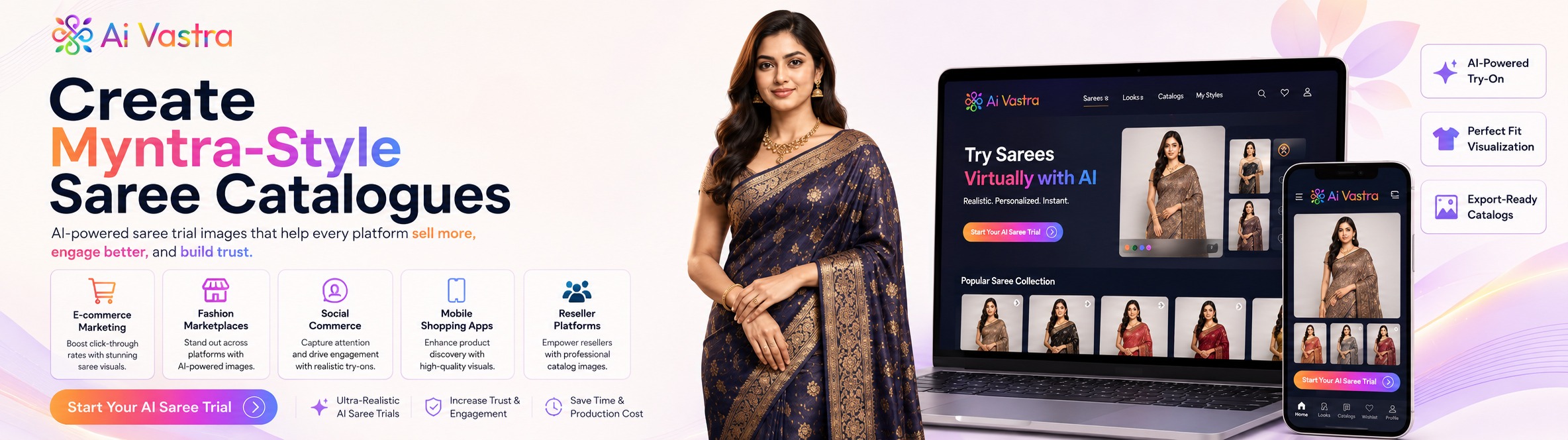
If you sell on any of these platforms, model images aren’t optional:
Myntra — Their style guidelines strongly favor model shots. Listings without them rank lower in category search.
Flipkart — Flipkart is witnessing high traffic on the ethnic wear segment. Model images drive significantly higher add-to-cart rates than flat lays in this segment.
Meesho — Their reseller base actively looks for ready-to-share product images. A great try on saree image on Meesho gets reshared across WhatsApp and Instagram, which drives organic discovery at zero extra cost.
If you’re trying to try saree online presentation across all three platforms at once, AI-generated model images are the only way to do it affordably at volume.
Also worth reading: how AI saree draping compares to traditional catalogue production — the difference in turnaround time alone is striking.
Saree Webcam Try-On vs AI Model Generation: What’s the Difference?
A saree webcam try on tool lets a shopper use their own camera to “wear” a saree virtually — it’s a consumer-facing feature designed for the end buyer’s experience on your website or app.
AI model image generation is different. It’s a production tool for you, the brand owner. You aren’t creating webcam overlays for shoppers; you’re making pro-high-quality photos for your marketplace listings.
They both come with their own merits but address different issues. If you want to understand where each fits in your overall strategy, the Virtual Try-On vs. Catalogue post on Aivastra breaks this down clearly.
The Bottom Line
Being a saree brand owner in 2026 is about keeping up pace, keeping the costs afloat, and presenting images that convert.
Saree trial online AI makes all three possible at once. What used to take two shoot days and a five-figure budget now takes a morning and a fraction of the cost — with results that hold up on every major Indian marketplace.
If you’re still organizing fittings every time you launch a new collection, it’s worth taking a serious look at what AI can do for your workflow. Aivastra is built exactly for this — ethnic wear AI that understands sarees, not just generic fashion.