
 0
0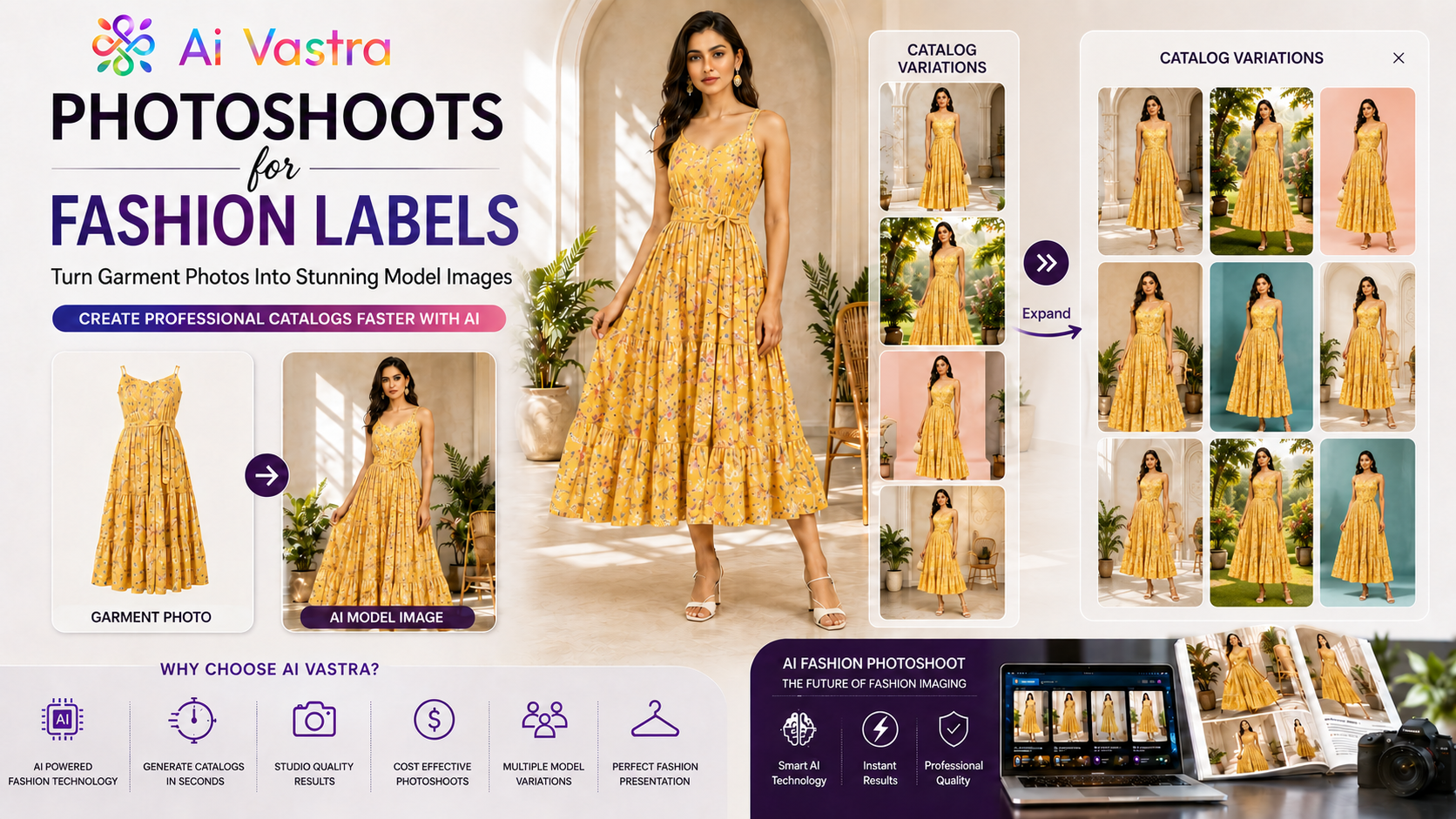
AI Catalogue Photoshoots is an advanced digital imaging technology that combines machine learning models and computer vision software to make high-quality product photos without the need for traditional on-set production. The automated technology makes incredibly realistic apparel presentations from flat garments or simple mannequin reference pictures, without the need for physical studio sets, model bookings and elaborate lighting setups. Incorporating artificial intelligence into the production pipeline helps E-Commerce Enterprises and Clothes Merchants to offer speedy image turnaround times, infinite visual scaling, and huge cost savings when producing high volume fashion catalogues.
What is AI Catalog Photography?
AI catalogue photography is a sophisticated software-enabled methodology that employs sophisticated generative modelling to position digital garment assets onto realistic virtual models. AI Fashion Catalogue process creates premium marketing assets purely on a computer with no requirement for real studio premises, camera hardware, expensive model hire and trip logistics, unlike traditional photography. In the broader world of fashion and e-commerce, this technology offers retail companies a uniquely efficient way to quickly refresh seasonal lookbooks, experiment with different style pairings and showcase a wide range of inventory options without the expense of real-world photoshoots.
How AI Catalogue Photoshoots Work
The technical execution of an automated imagery campaign is a standardized digital process that takes flat lay assets and turns them into dynamic marketing media:
Upload product photos
Retailers begin by providing high resolution source images of their physical garment goods, clearly shot either as flat lays or on basic ghost mannequins.
Utilize AI Fashion Photography Tools
Specialized platforms for generation meticulously map the physical characteristics of the garment, examining the texture, drape, seams, and fabric details.
Visualize on the basis of models
Users input demographic characteristics, background settings and posing styles and the software creates a fully synthetic photorealistic model wearing the exact clothing item.
Export ready to use Catalog Images
The final high-definition compositions are combined, formatted, and exported to satisfy the technical listing requirements of major e-commerce web stores.
The Role of Automation in Building AI Catalogues
The fully automated pipeline permits multi-product batches to run simultaneously, allowing web administrators to update entire digital storefronts in a single day.
The AI Catalog Photography Benefit for Fashion Brands
The operational and financial efficiencies of software-driven studio automation for emerging fashion labels are clear:
Faster production times
Typical multiday media production is cut to minutes, enabling fashion merchants to immediately post new collections to web stores.
Lower operational complexity
Lessens administrative friction by removing the need to book hair and makeup people, organize model agencies and deal with physical sample logistics.
Scalable Generation of Images
With no extra costs, brands can easily show their entire clothing line on a variety of virtual model body shapes, ethnicities and background settings.
Consistent image quality
Consistently studio lit with true color fidelity and correct file size across the online store to give clients a highly polished browsing experience.
Great for AI Product Photography of Clothing
Provides a flexible solution for web based businesses with a fast inventory turnover, making sure that individual apparel drops are fully captured and ready for sale without storage or staging delays.
How AI Creates Fashion Models for Catalog Photos
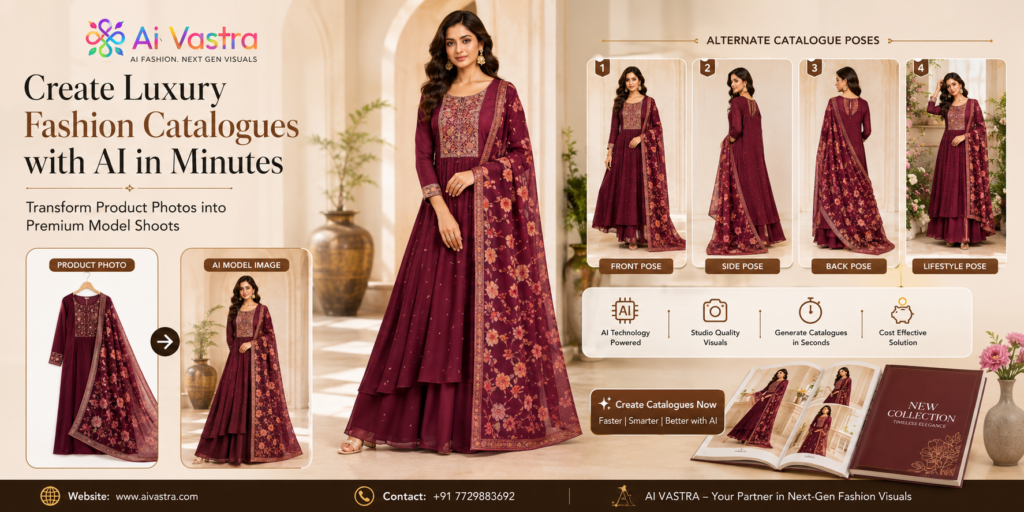
The models are fully synthetic, hyper realistic digital personas generated by powerful deep learning algorithms to promote garment collections. Fashion manufacturers are no longer holding a casting call. They use generative software to build personalized virtual models from scratch, modifying their age, ethnicity, body form and facial expressions to certain marketing demographics. The realism and the level of customisation means retailers can show off their products on a range of figures, without needing to book performers, travel to locations or deal with complicated on-set logistics.
In the e-commerce and AI Fashion Photography world, virtual models act as an ever-changing digital canvas. Sophisticated computer vision technologies take a simple flat-lay or mannequin shot and analyse the texture, stitching and folds of a physical garment, before seamlessly draping the fabric onto the produced persona, allowing it to hang organically. Businesses that operate online can have an entire staging process on a computer where they can rapidly change out their visuals, backgrounds and even make full seasonal look books in a fraction of the time of traditional studios.
AI Catalogue Photoshoots Applications for the Fashion Industry
AI Catalogue Photoshoots move to automated, software-based studio imaging addresses some logistical problems for a variety of commercial apparel sectors:
Direct to consumer fashion brands
Automated staging allows direct to consumer brands to quickly gauge market demand for new styles or colorways and create full web ready look books without the need to mass produce garments.
Saree Ethnic Wear Brands
For retailers working with complex, high-pattern textiles, cutting edge AI technologies are used to cleanly map intricate fabrics and drapes onto virtual figures, leaving behind the repetitive, time consuming tasks of traditional model wrapping and labeling.
Internet retailers
Independent online retailers use Digital generation to quickly transform basic flat-lay product photos into quality, high converting lifestyle imagery that meets stringent marketplace standards.
Wholesale Catalog Manufacturers
B2B apparel distributors use automation to turn hundreds of variations of garments into consistent print and digital catalogs, helping them meet their high-volume publishing schedules.
Businesses with High Volume Products
Automated pipelines are utilized by fast-fashion manufacturers and large business retailers to reduce studio scheduling delays, allowing new products to go live the moment they hit the warehouse, with large weekly inventory dumps.
Future of AI Fashion Photography
- Generative design suites are moving beyond static poses and now enabling merchants to dynamically change the clothing posture, fabric motion, and even the detailed environmental reflections.
- To keep up with the fast lifecycles of fast fashion products, major garment stores and independent brands are adding automated generation to their weekly inventories.
- By moving layout rendering, color matching and backdrop staging into automated machine loops, brands can perform smooth omnichannel media refreshes continuously.
- The technology is moving into the realm of interactive virtual try-ons, taking over static catalog sites and replacing them with personalized purchasing experiences.
Frequently Asked Questions About AI Catalogue Photography
What is AI catalog photos?
It’s a digital process that employs machine learning to design clothes on realistic virtual models, minimizing the need for real-life pictures.
How does AI catalog photoshoot work?
You upload a flat-lay or mannequin clothing photo, and the software drapes it onto a synthetic model automatically.
Is AI fashion photography suitable for smaller brands?
Yes, it takes away the high cost of studio rent, equipment and model fees for cost conscious brands.
Will AI ever fully replace traditional photo shoots?
It is perfect for large volume e-commerce catalogs although they still use traditional shots for artistic editorial campaigns.
How can AI product photography for clothing help increase efficiency?
It removes the hassle of shipping samples and takes care of whole collections at once, so new products can be live in an afternoon.
What are the main benefits of AI catalogue creation?
The main benefits are short time-to-market, consistent quality of the listing and the ability to show diverse model demographics in real time.
Conclusion: Why AI catalogue photography is the future of fashion content
E-commerce companies can benefit from automated fashion photography to get a strong competitive edge by eliminating traditional production bottlenecks. Clothing companies can expand their collection, experiment with background appeal and cut down on overall operating costs by transforming physical flat lay images into realistic lifestyle images. As the material accuracy and fabric drape precision of generative models improve, an automated visual pipeline will be essential for apparel manufacturers to scale production, adapt to market trends and maintain a professional online presence.