
 0
0
How Gen Z Shopping Habits Are Pushing Fashion Brands Toward AI Try-On
Gen Z is now the primary growth demographic for fashion retail, and they don’t shop the way millennials or Gen X did. Mobile-first, short attention spans, social-proof driven, allergic to friction. AI Try-On isn’t a trend brands are chasing for novelty. It’s a direct response to how this generation actually behaves when they shop.
Key Takeaways
- AI Try-On is a direct response to Gen Z’s rejection of fitting room friction, social exposure, and traditional sales pressure, not a passing trend.
- Growing up with AR filters and short-form video has shifted Gen Z’s trust from salespeople to visual proof, a pattern brands can meet with try-on technology.
- Removing friction, offering privacy, and giving instant visual proof are the three things brands need to prioritize to match Gen Z fashion trends 2026.
The Friction Points Gen Z Actively Rejects
Understanding how Gen Z shops online starts with understanding what they refuse to tolerate offline. Trial room queues are a dealbreaker, not a minor inconvenience. Waiting fifteen minutes to try on three items feels absurd to a generation used to instant everything.
There’s also a social dimension most retailers underestimate: in-store trying-on can feel exposing. Being seen carrying items to a fitting room, waiting in a visible line, or getting caught mid-outfit-change creates a low-grade social anxiety that older shoppers barely register but Gen Z feels acutely. They’d rather make the decision privately, on their own terms, before ever stepping into a store or even opening a checkout page.
And then there’s the sales pitch itself. Being approached by staff with “can I help you find something” often reads as pressure, not service. This generation prefers browsing without being sold to, gathering their own information, and deciding on their own timeline.
Why Gen Z Trusts the Simulation Over the Salesperson
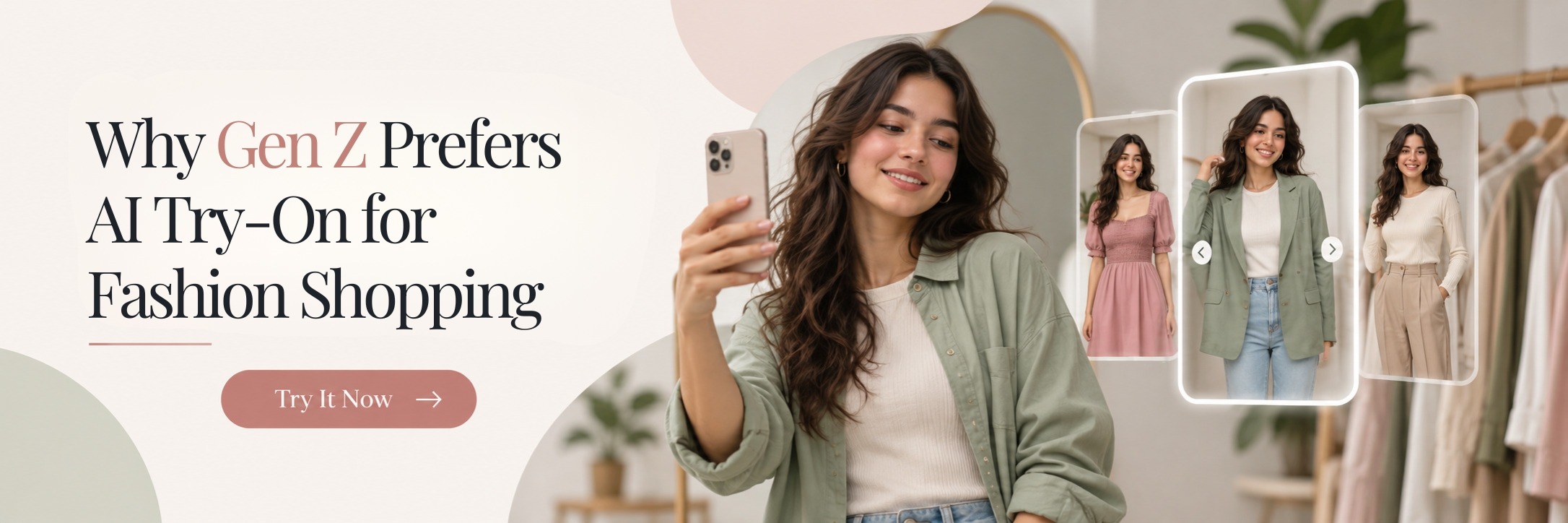
This is the real shift underneath Gen Z ecommerce behavior: trust has moved from people to proof. Growing up with Snapchat and Instagram AR filters means trying something on virtually isn’t a novelty to Gen Z, it’s just how you check what something looks like before committing. A filter that shows how sunglasses or makeup looks on your face is the same mental category as a virtual fitting room. Short-form video culture reinforces this further, seeing is believing, and seeing yourself specifically is even more convincing than any product description.
This is the move from “trust the salesperson” to “trust the simulation.” A staff member saying “that looks great on you” carries far less weight than a shopper seeing an actual rendering of themselves in the garment. It’s not that Gen Z distrusts people, it’s that visual proof requires no social performance and no persuasion effort. It just shows the answer.
What This Means for Fashion Brands’ Tech Stack
What Gen Z wants from brands isn’t complicated once you frame it around friction removal. They want to shop privately, decide quickly, and see real visual proof before buying, whether that’s online or in-store. AI try-on for Gen Z solves all three at once: no queue, no exposure, no salesperson intercepting the decision.
This is exactly the shift AI Vastra’s virtual try-on tools are built around, letting shoppers see themselves in a garment instantly, privately, and without needing anyone else’s input to feel confident about the choice. Our AI Virtual Try-On service page covers how this works across both website and in-store kiosk formats, and our Webcam VTO post breaks down the specific mechanics of the try-on experience itself.
Retailers still relying on traditional fitting rooms and sales-floor persuasion aren’t just behind on technology. They’re misreading a generational shift in how trust actually gets built.